There was a struggling American Plum in my mother’s front yard. It was trapped by pines, and every year it would hang low enough to scratch the top of the cars backing out of the driveway.
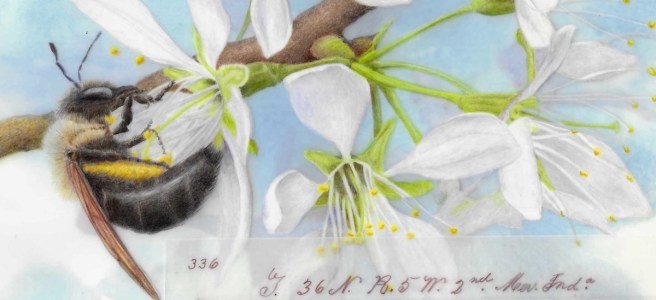
Sadly, the plum’s been removed. But in its last spring, I brought a flowering branch home to do some sketching on my patio. Within minutes, the fresh blossoms attracted a lovely mining bee, one of the earliest native Indiana bees to emerge each year. Early flowering trees like the plum provide spring bees with essential food when little else is blooming. I like to include this piece when I exhibit a collection of bird artwork because insects are a critical food source for many birds. Insects that pollinate do double work and ensure food sources for birds and wildlife.
The phrase “beautiful spring brook” is lifted from the text decorating this piece. The words are reproduced from nineteenth century Land Survey notes for Porter County Indiana. It’s rare to find a reference to beauty in these notes, which are mostly dry descriptions of the widths of trees and the locations of survey posts. But every now and then a phrase escapes the pen of the surveyor suggesting “I see this place.”
The sound seems to drift down from the heights of the tall trees. It’s a dreamy, lazy buzzing, rising and falling in volume, and tapering off to be picked up again in a slightly different place. Growing up in Indiana, it was the background sound to the “dog days” of summer. I can’t separate my memories of freezer pops and visits to the Lake from the thrumming sound of the annual cicadas.
Our yard (3 acres of weedy grass, silver maple and black walnut) is revealing its wealth of insects this year (and other critters). Along the tree lines, I’m delighted by flying bugs, bees, spiders, and dragonflies. I discovered a tree frog sheltering from the sun, and rescued a handful of hungry monarch caterpillars that would have starved where they hatched. I moved them to bigger fare.
Gratitude seems like a small word to exchange for this bounty of wonders. I get to play out of doors as part of my job, and then generate something lovely from that play. The hours I spend outside observing, recording, watching, and listening are as important as the hours I spend in the studio creating, drawing, composing and rendering.
A new project is emerging from my summer’s work, as I process a deep dive into nature and local history. It combines my fine art paintings with genealogy and environmental education. You can follow along as I develop the project in upcoming posts.
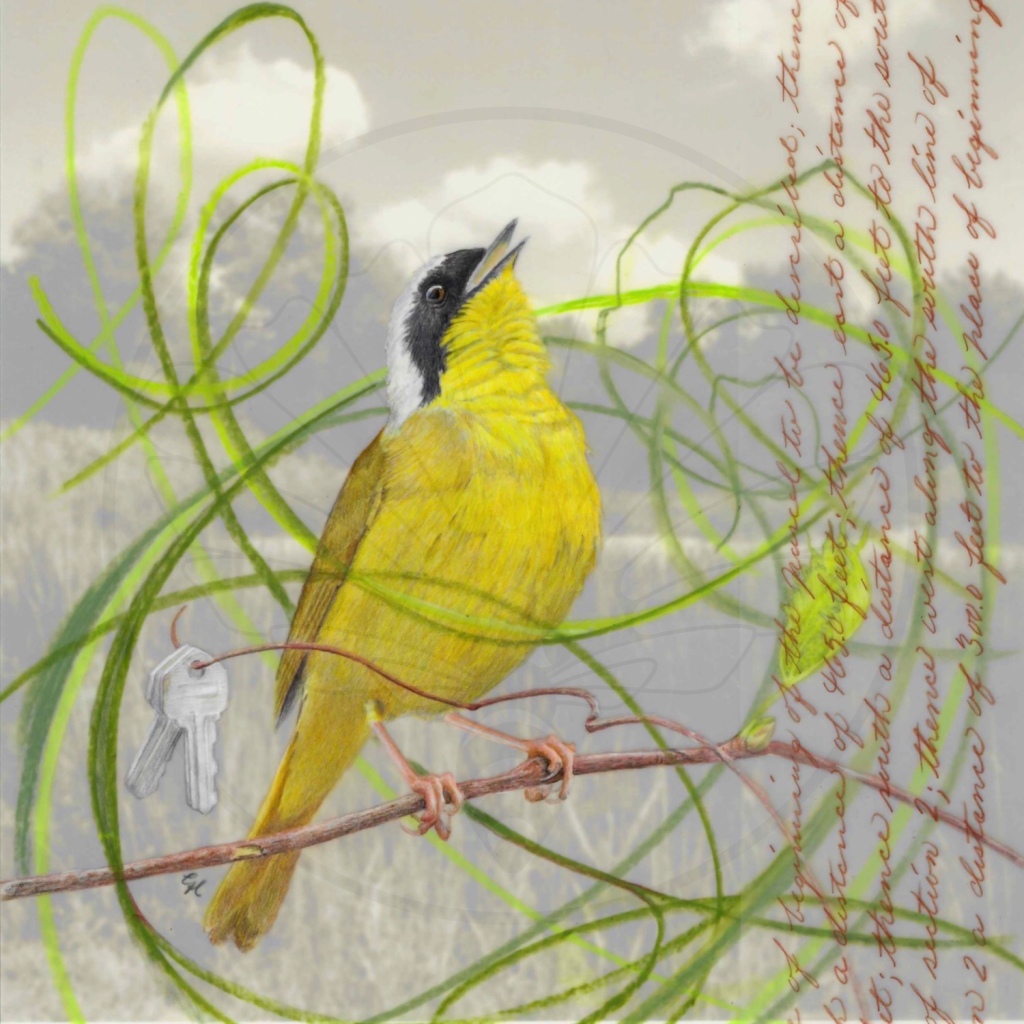
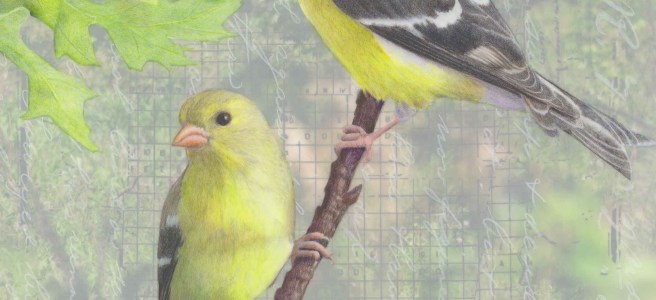
In the mean time, the first two pieces are almost complete. The first is called “Place of Beginning,” and reflects our move back to Indiana. The text is a partial legal description from our mortgage documents. This bird is emerging from chaos (have you ever moved across country?). It’s song is a clear bell coming from the storm of activity brought on by change.
Each piece in this new project will incorporate historic documents about a geographic location, feature, or region (such as the Kankakee River or the Indiana Dunes). The documents record changes in Northwest Indiana between the years of settlement (roughly 1830) to the first successes of the conservation movement in the early twentieth century (roughly 1925). I’m eagerly searching out diary entries, land survey notes, stories, poems and articles.
“Enter a Wet Prairie” explores the historic loss of habitat for grassland birds like the Dickcissel. The background photo is the restored prairie at Reynolds Creek Game Bird Area, and the historical document is the land survey note matching that location. Restoration efforts in Porter County are reclaiming land for tallgrass prairie, and there is hope that we can continue to enjoy grassland plants and animals into the future.
For me, March is the opening of the creative season. As the studio fills with new ideas, the world pivots from darkness to light, from the quiet waiting of Winter to full-throated Spring. It’s a good time for reflection. My artwork continues to evolve, but with familiar components—a love of beauty, a prayer for conservation, a hope of connection.
Eastern Bluebirds in progress, on a cake plate with peach and lottery ticket. Colored pencil on drafting film.
My recent colored pencil paintings capture imaginary wildlife encounters in human spaces, blending storytelling with natural science illustration. They place birds in human-made settings, echoing the role we play in shaping and controlling wildlife habitat. I’m never sure where the whimsy comes from, but I need that playfulness to round out my compositions.
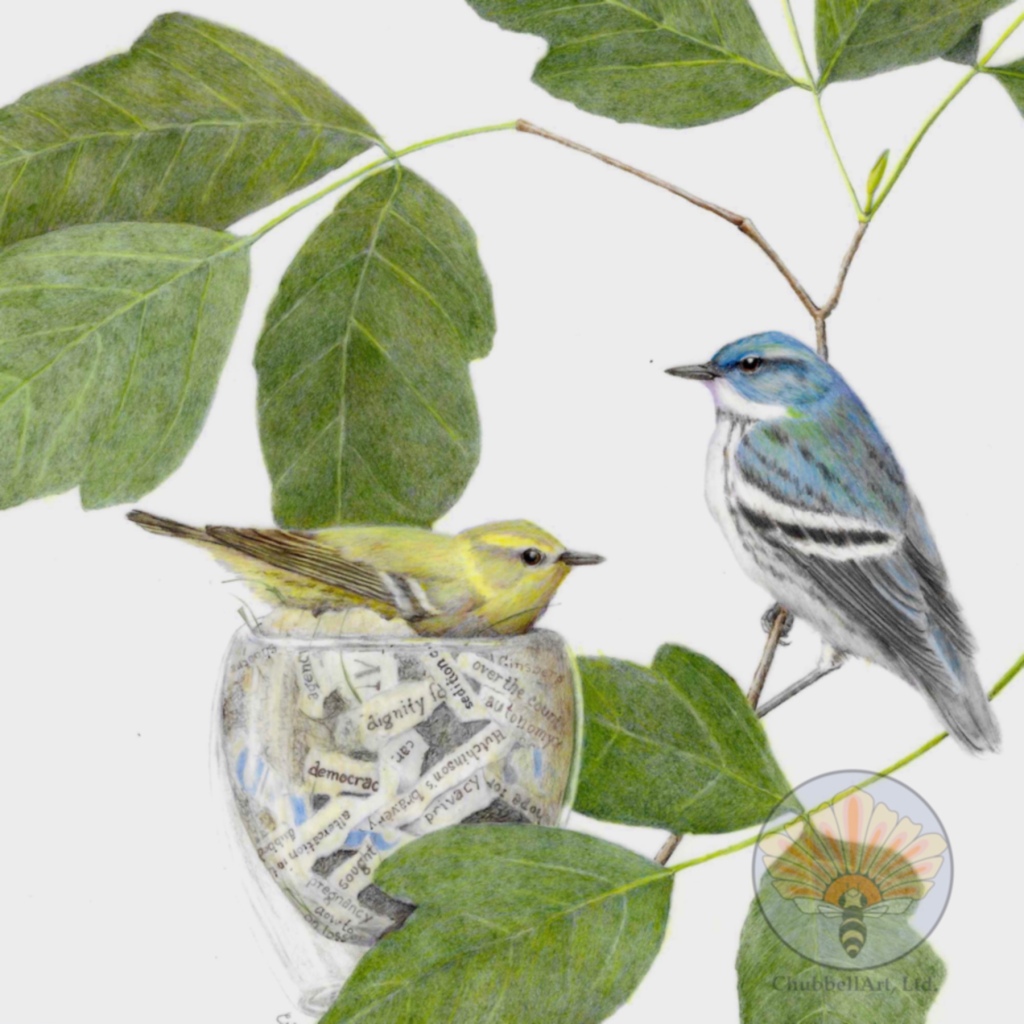
I created “Folly” in response to seeing nesting Cerulean Warblers at a birding festival. Through the scope, we watched the male and female tending their nest, tucked in the crook of a branch about 20 feet directly above a busy trail. It reminded me that birds have a precarious life, often struggling to succeed in challenging conditions.
“Folly.” Colored pencil on drafting film. Selected for the Hoosier Women Artists Exhibition 2023, it’s on display for a year at the Indiana State House.
I illustrated the nest as a glass cup filled with the news of the day, a fragile and potentially disastrous choice. I surrounded them with Poison Ivy, which has a dual nature. It’s terrible for us, but beneficial for birds. I titled this piece “Folly” because foolishness is a good place to begin any journey. In foolishness we find the confidence to trust we’ll find what we need along the way.
I don’t know where my muse is taking me this year, but if it’s a Fool’s Journey, it’s bound to be interesting.
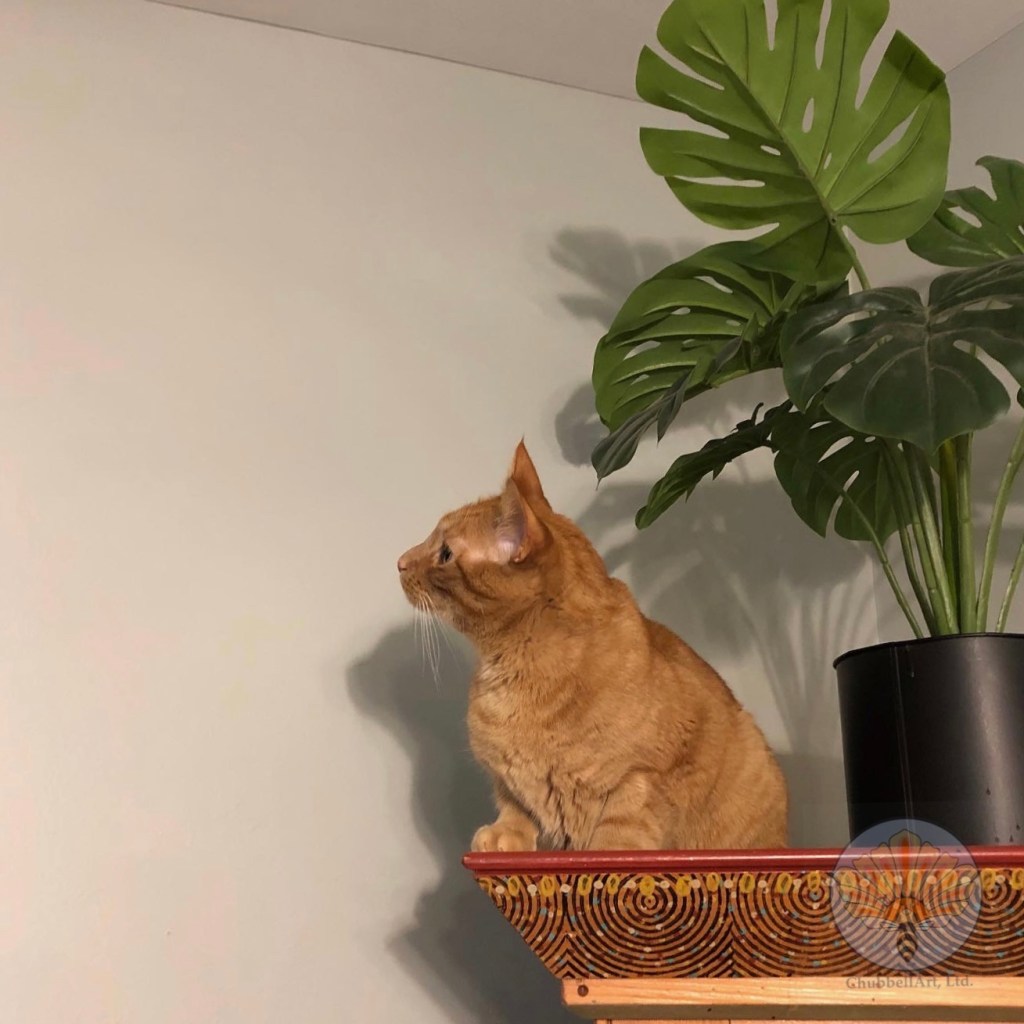
At 3 a.m. we awoke with a start to the sound of mayhem coming from the kitchen. My husband arrived first on the scene, and was just in time to see our otherwise lazy cat flying along the counter-top in hot pursuit of a mouse.
Listening for mice in the walls, or maybe just thinking about shadow puppets.
The plural noun for a group of mice is a “mischief.” How appropriate for the mice that share our home. They’ve eaten my favorite rubber spoons, left trails of droppings behind the stove, and shredded a pair of oven mitts for nesting material (eek!). But at least the cat finally got some exercise.
By the time I got to the kitchen the excitement was over. We set some live traps, did our best to decontaminate the scene, and eventually flopped back into bed. I don’t think we slept much. I kept listening for the trap in the kitchen to spring, too far away to hear except in my imagination.
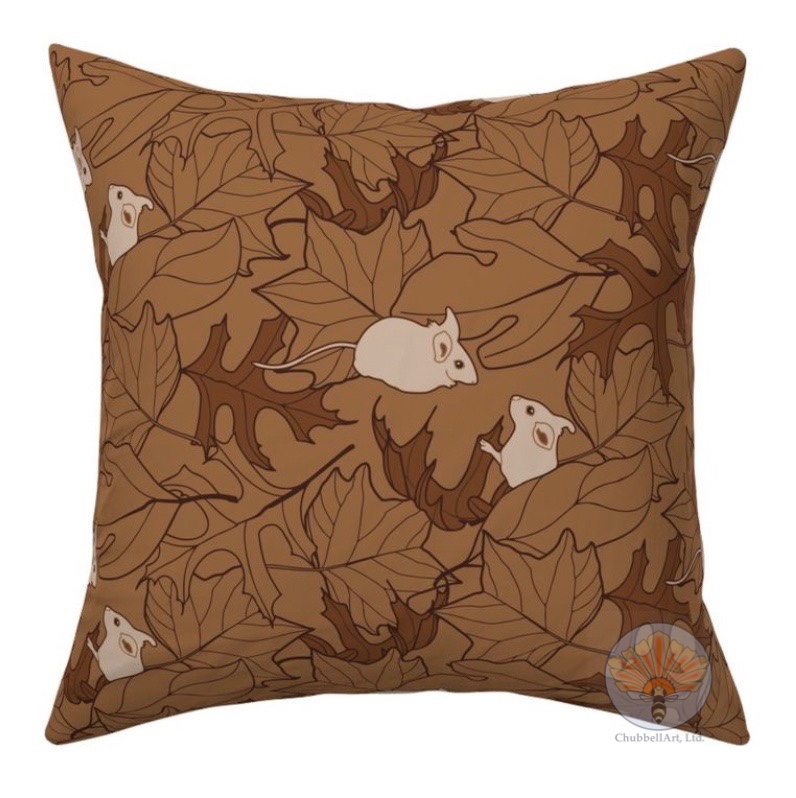
The experience rattled around in my brain for a few months before a Spoonflower neutral pillow contest brought it to the surface. We caught two mice in our live traps, and I released them among the leaves and grasses. Now they’re hanging around in this repeating pattern, no doubt hoping to find my new oven mitts or a tasty spoon.
Would you like to explore with the mice? You can purchase this design on Spoonflower soon, or sign up for my e-newsletter for special info and a free coloring page.
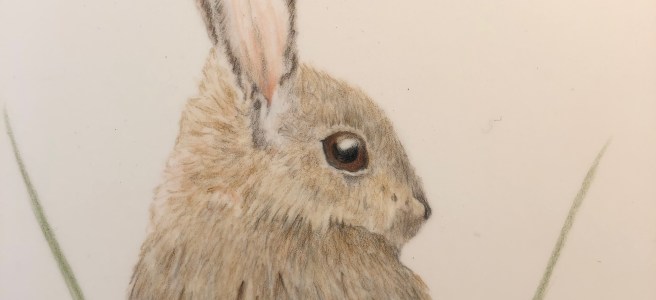
Baby bunnies are all ears and bellies. To celebrate the Year of the Rabbit, I’ve just completed three eastern cottontail illustrations based on my photos. May is a reliable time to watch for these tiny foragers, who will taste almost everything in the garden. We were entertained by their zippiness, which I suppose kept them from being taken by hawks and owls. We weren’t so fond of their appetites. They especially loved my Firewitch Dianthus, and I hardly got to see it bloom once the bunnies arrived. I’ve illustrated them with phlox, another of their favorites. Which bunny would you choose?
Baby bunny illustrations
Originals and prints will be available soon. Please use the contact page if you’re interested.