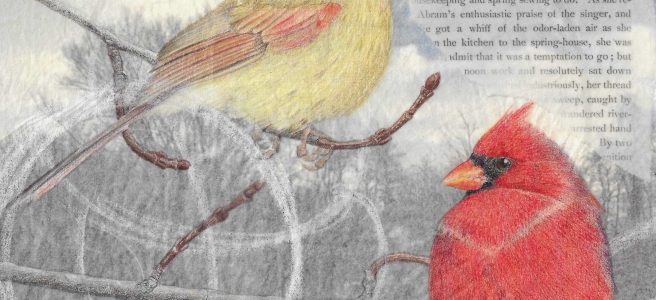
Few bird species are as iconic as the Northern Cardinal. Our love-affair with the Cardinal has a long history and has been used to help advance the goals of conservation. In 1903 Gene Stratton Porter published The Song of the Cardinal. Her plucky hero and heroine were a pair of newly mated birds keeping house at the edge of human habitat. In the book, an old farmer and his wife (Abram and Maria) become their admirers and protectors. Here I’ve included a page from the book, a moment when Maria decides to heed the Cardinal’s call to Come See! Come See!
I feel deeply emotional about It Was a Temptation, as Stratton-Porter intended with Song of the Cardinal. The deeply humanized birds at the center of her novel evoked a strong emotional response from a wide readership. Do anthropomorphic animal characters support the cause of conservation or blur the lines between human and animal needs? I don’t have an answer, but I believe we can enlarge our circle of care beyond our own families and communities when we empathize with other people and creatures.
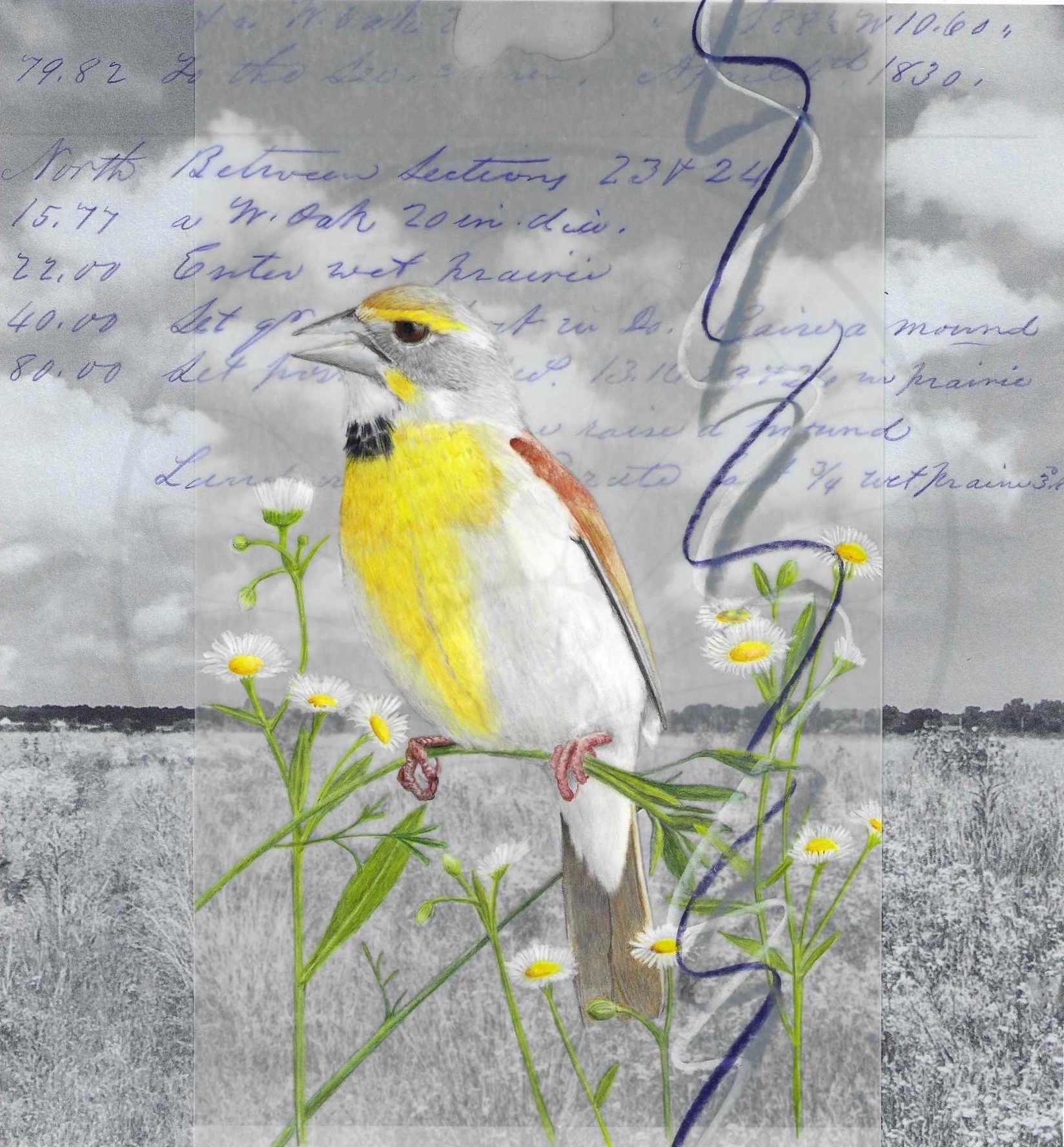
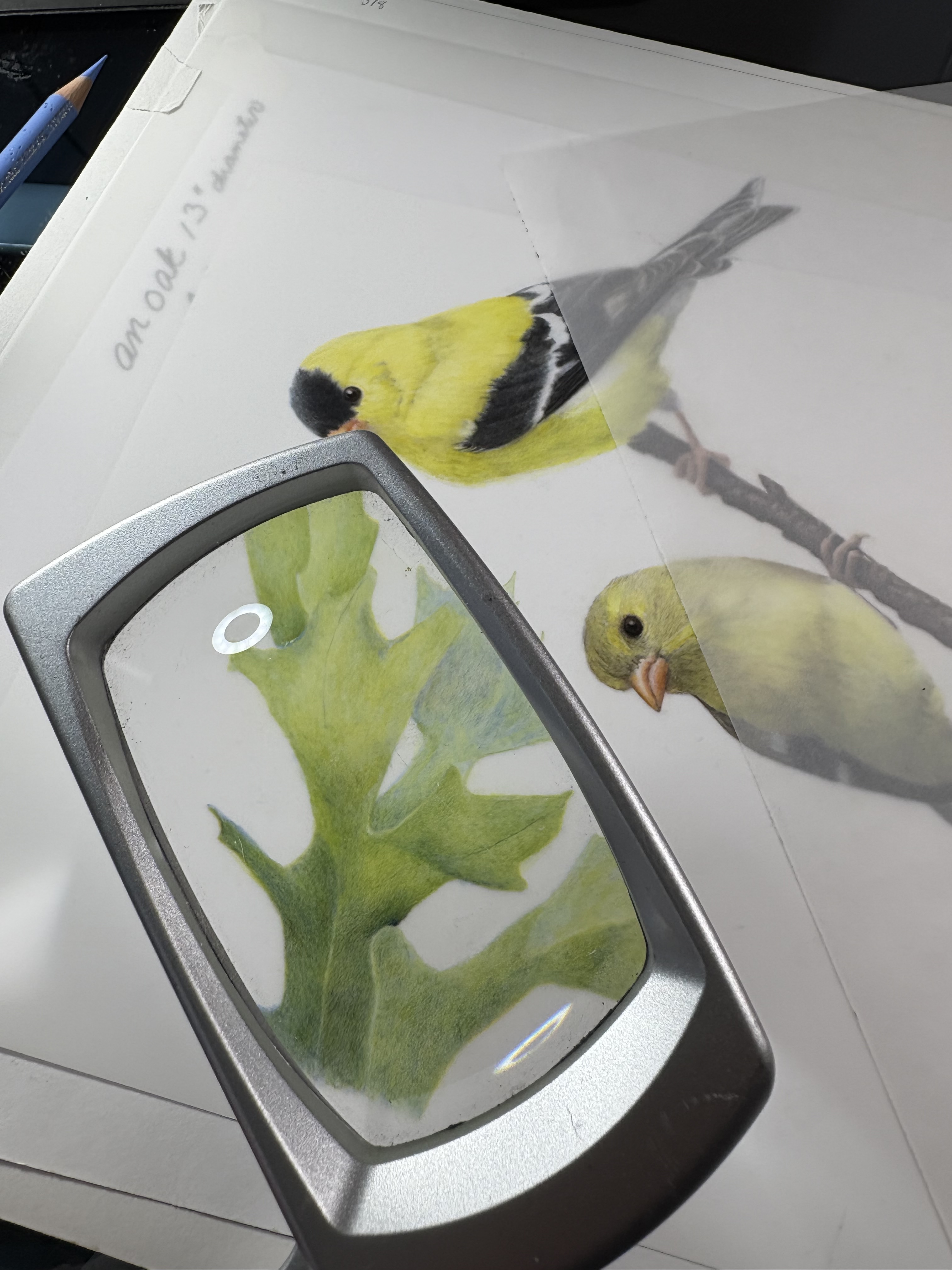
I illustrated this piece on transparent paper, which has a different feel under my pencils than the drafting film. And when combined with the digital image underneath, it reveals and hides shapes and colors in its own way. I like the more rustic results.
When I’m asked about my artistic process, I usually start with the unique substrate I use. I learned to illustrate on drafting film from artist Susan Rubin in her classes at the Denver Botanic Gardens. Susan creates beautiful botanical paintings on this surface. I’ve been using it for almost 10 years to illustrate birds and botanicals.
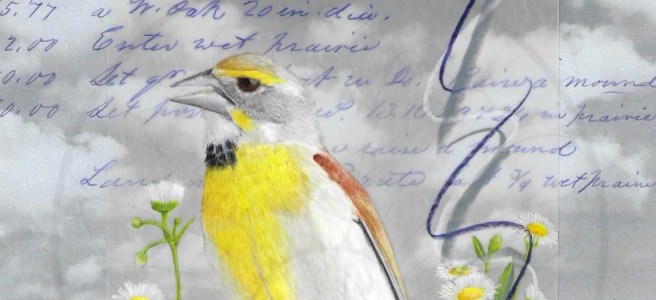
“Enter Wet Prairie” (copyright Christine Hubbell)
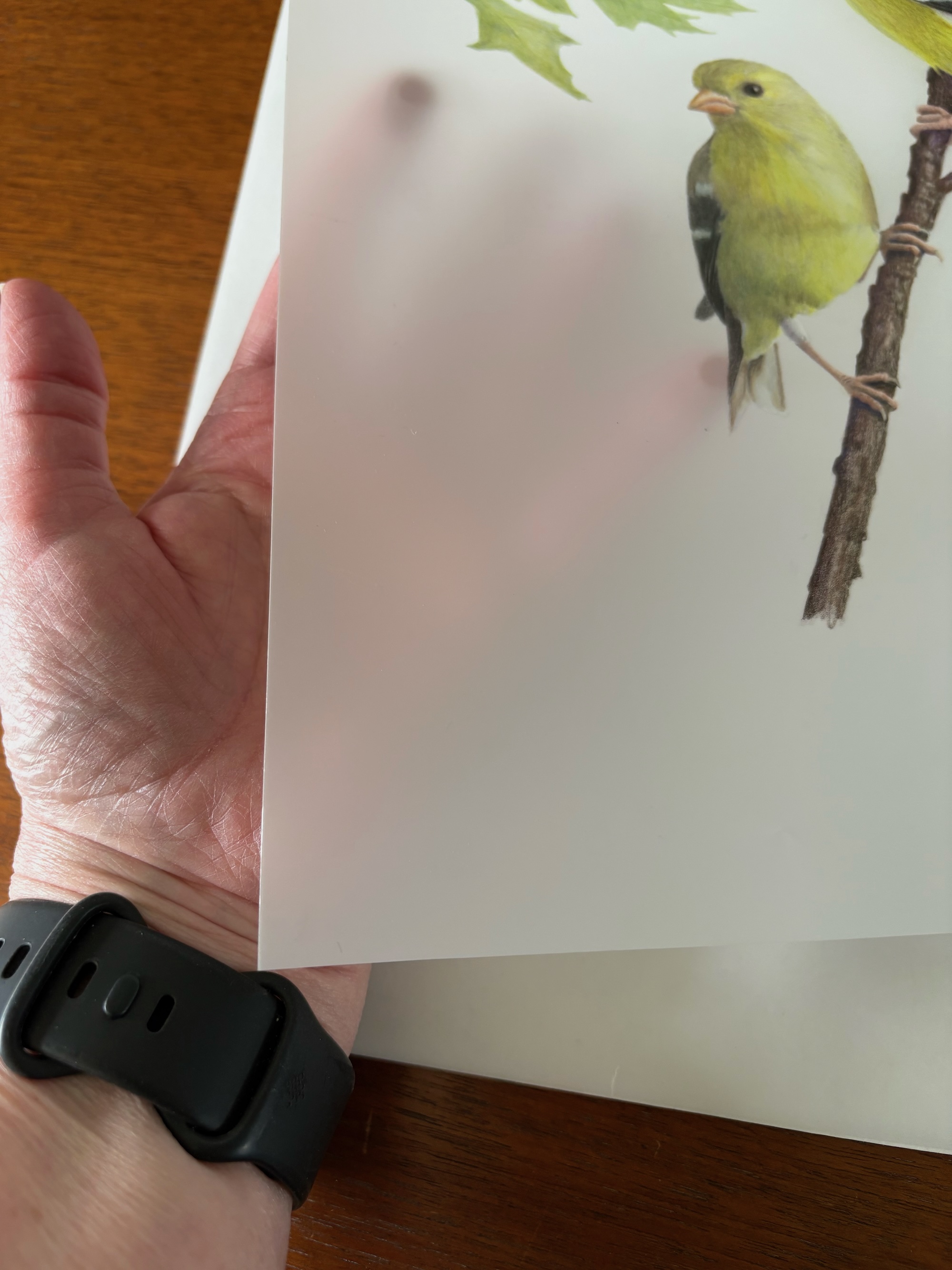
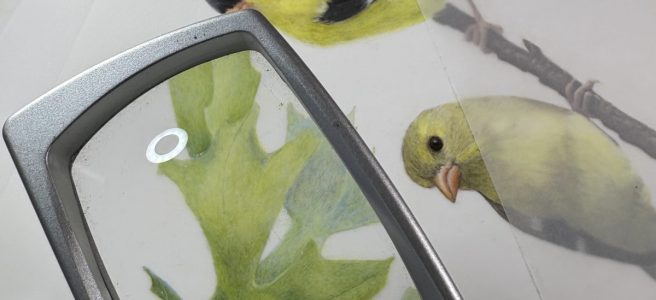
Similar to vellum but inexpensive and manmade, drafting film can be frosted on one or both sides and has enough “tooth” to hold the colored pencil pigment. The film is translucent, which makes it ideal for layering over mixed media. I can also layer elements on top of it. I purchase double sided matte Mylar from Meininger’s, one of my favorite art supply stores in Denver.
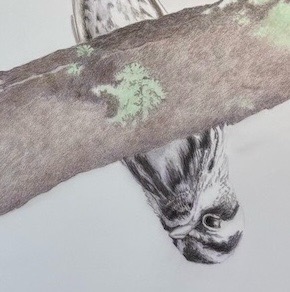
Goldfinches in progress on drafting film (copyright Christine Hubbell)
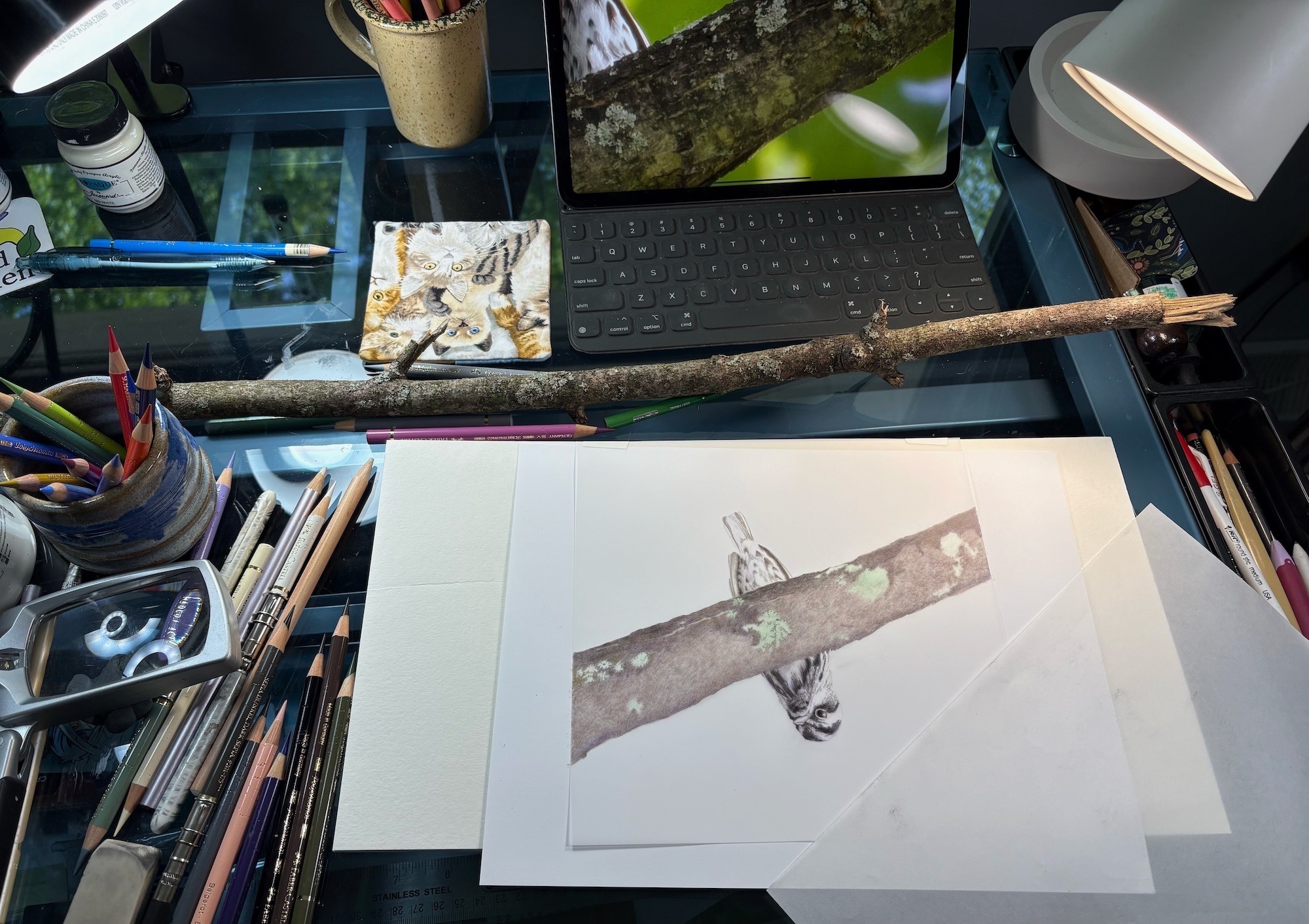
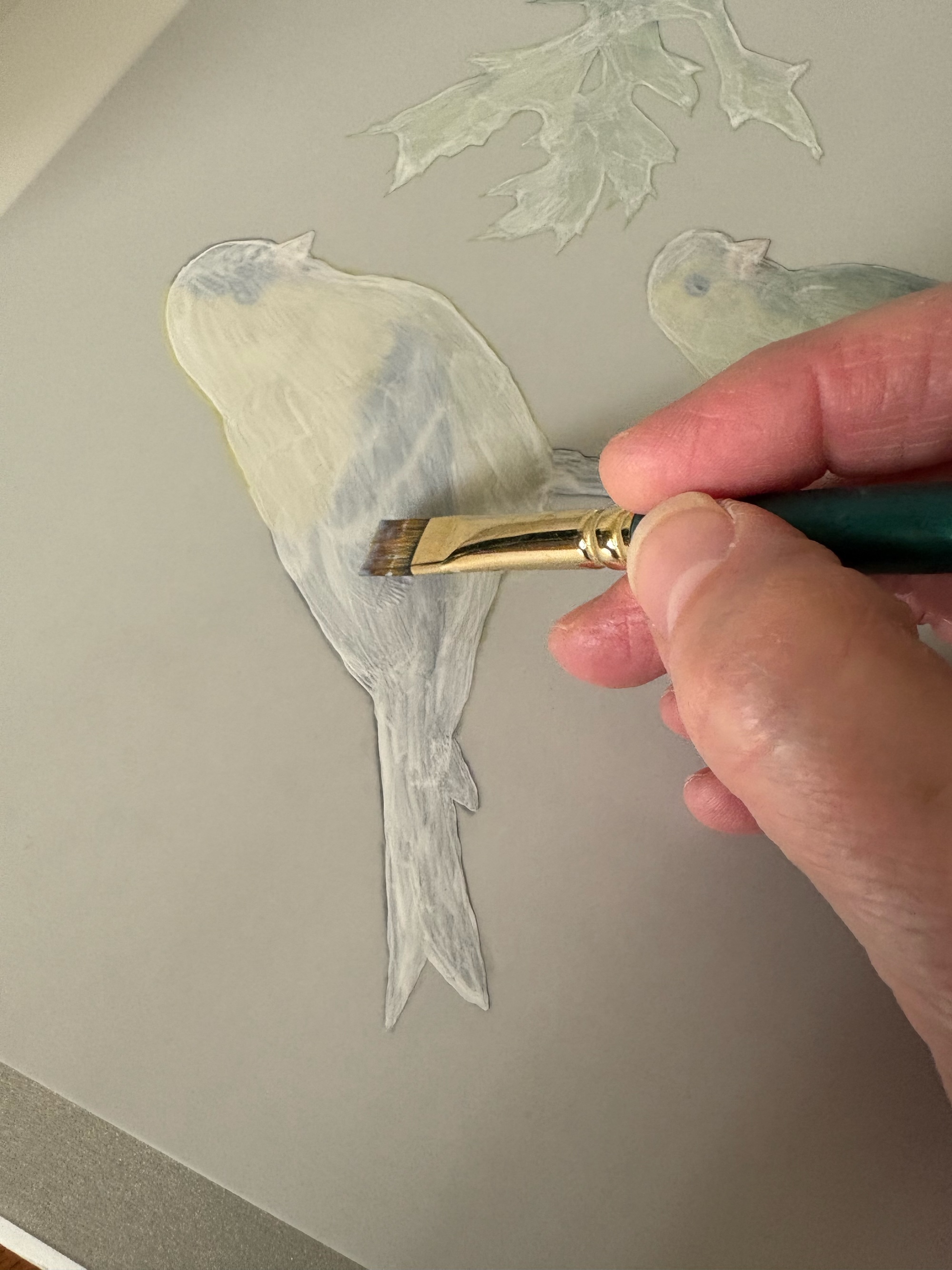
An important step in this process is to mask the reverse side of my illustration to make it opaque. I use Jacquard Neopaque white fabric paint applied with a variety of standard acrylic paint brushes. Because the paint is flexible when dry, it won’t crack if I bend the drafting film during finishing, mounting and framing.
Masking with acrylic paint (copyright Christine Hubbell)
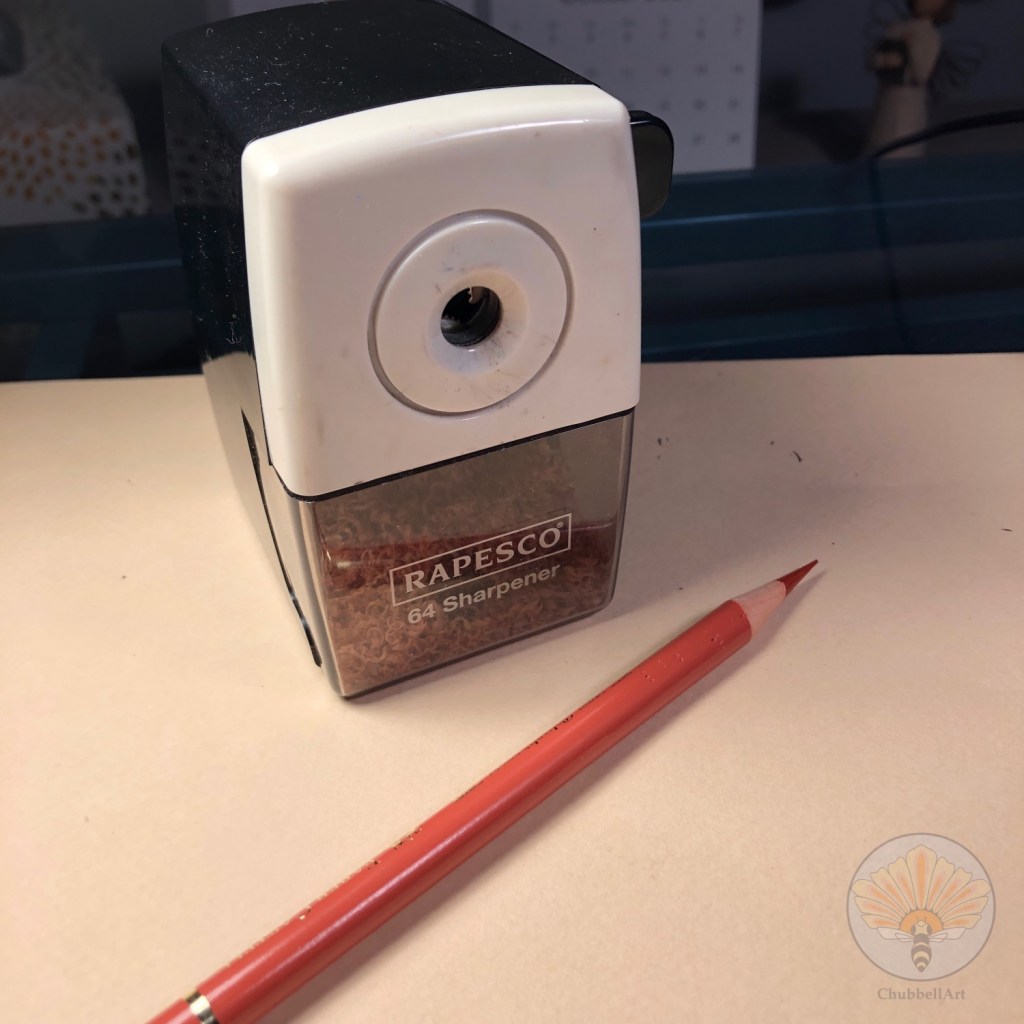
Today I’m posting a short video for my colored pencil class. We’ve been having fun with small botanicals and geeking out over pencil sharpeners. I love to see people in the zone with their artwork, so rather than interrupt them with a two-hour demo, I compressed the process into a three-minute time-lapse. Whew!
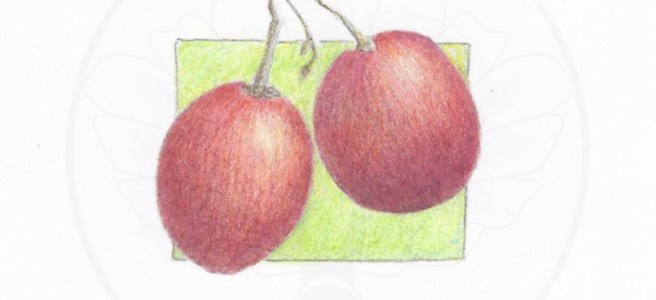
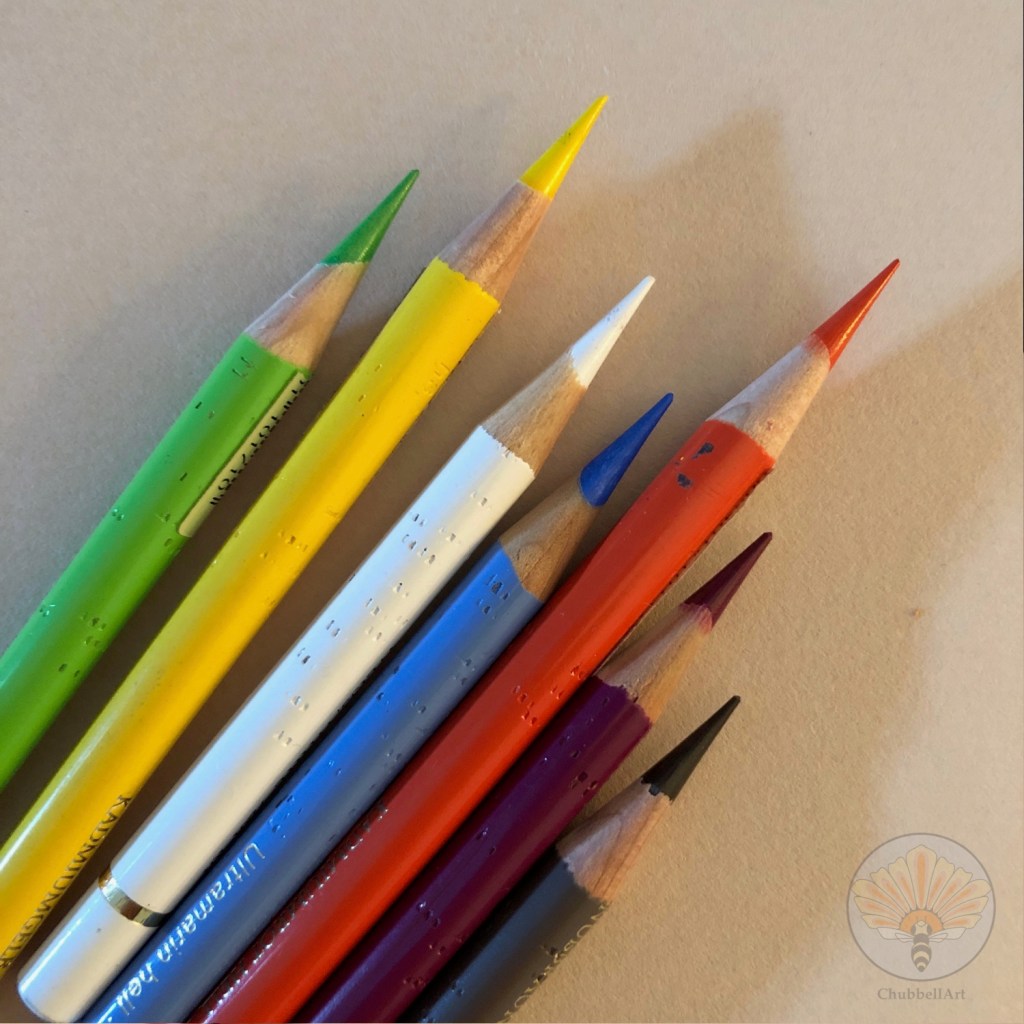
For my grapes, I chose seven colors that often show up in 12-pencil sets: white, yellow, purple, brown, red, light blue, and light green. (For my fellow pencil geeks, I’m using Faber Castell Polychromos White 101, Cad Yellow 107, Magenta 133, Walnut Brown 177, Light Cad Red 115, Light Ultramarine 140, and Light Green 171.)
Grapes are easy to draw and fun to paint. This is your invitation to head over to the fruit bowl, bring some grapes to your sketchbook, and paint along. Oh – and sharpen those pencils to a long point!
When the weather was too poor this winter for outdoor sketching, I set up my drawing supplies on the porch, plugged in the space heater, and worked on sketching birds from life. I found the chickadees and finches very challenging. Why couldn’t I observe some sleeping ducks on a pond instead? But the most convenient, numerous collection of live birds was right there on the other side of my window.
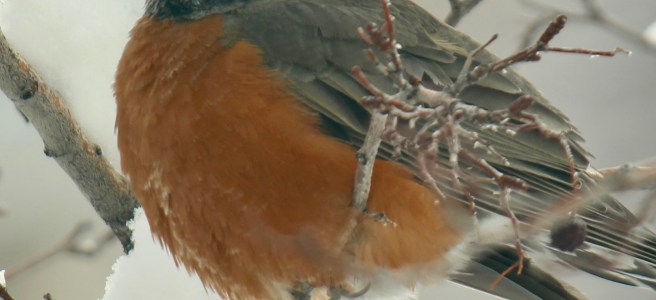
February feeder birds sketches, mostly Juncos and House Finches.
So I worked, and struggled, and wondered how anyone completes an actual sketch of a bird in the field. I started with basic gestures, borrowing ideas from books, blogs, and videos. I knew I could draw from photos, but I wanted to be able to complete a finished-looking sketch during my sketching session. Then I found a bit of helpful advice: build your memory.
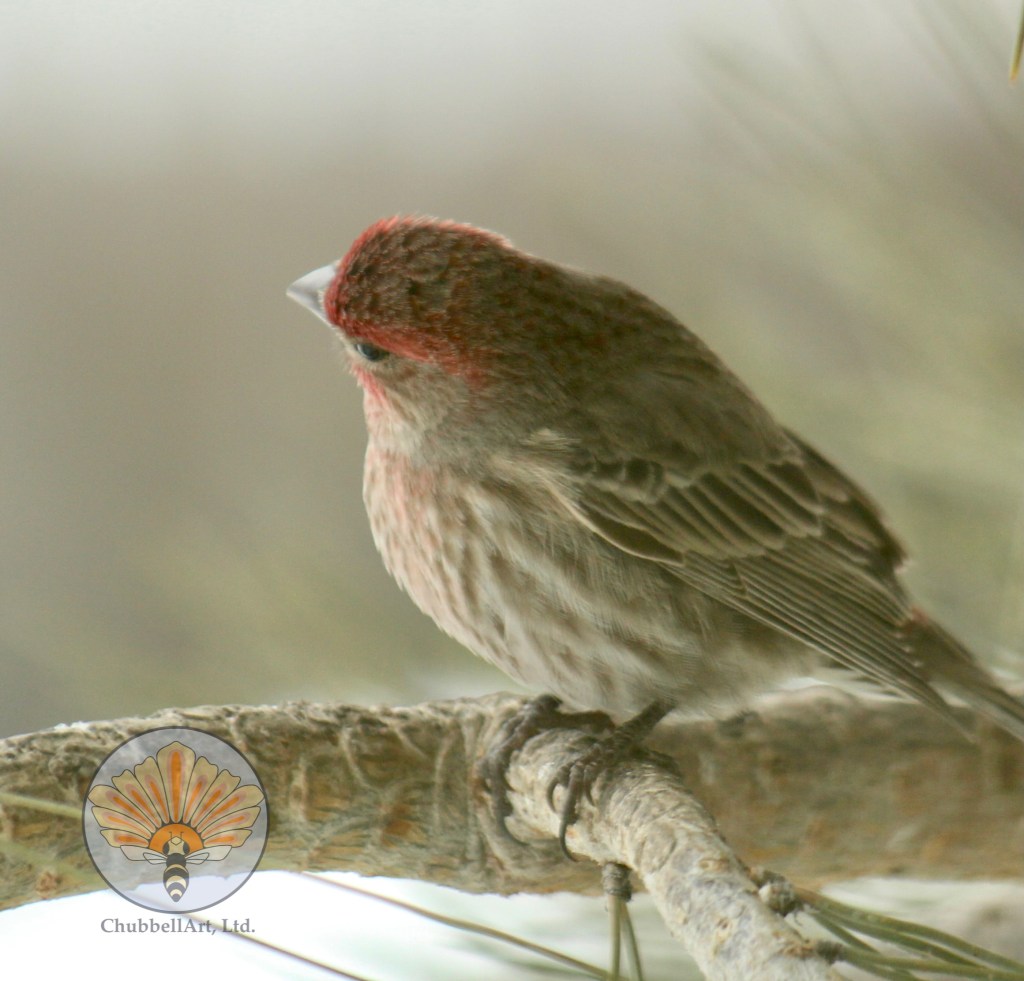
Always on the lookout, and constantly on the move: House Finch in the Ponderosa Pine. You only get a moment to capture something about a live bird.
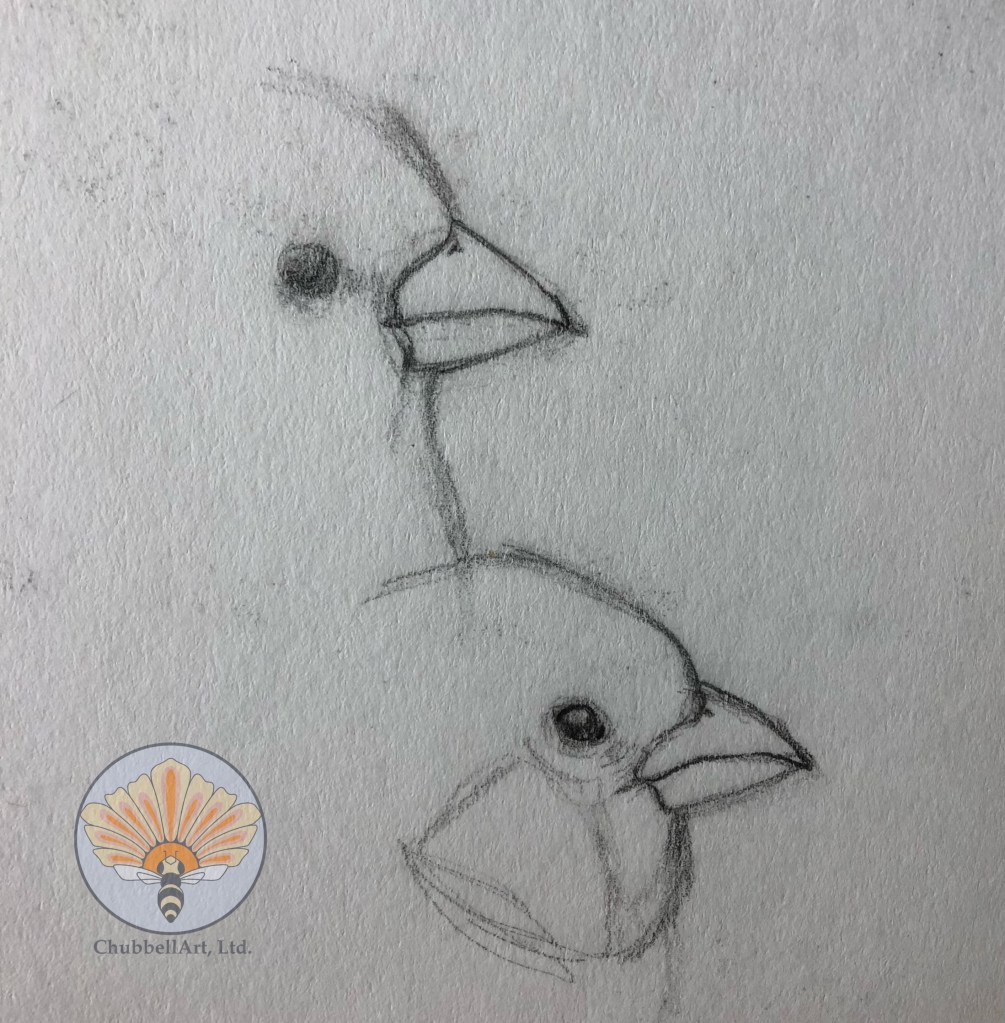
Hmmm, I thought. I guess I should memorize the shape of that finch bill. But no, it’s not like school. I couldn’t memorize a set of visual facts. Putting the right information into memory requires repeated drawing from life, which enhances both my observation and drawing skills.
The more we look, the better we understand. A second observation of a House Finch bill at bottom right.
When I realized that the practice itself would build my memory and make sketching faster, I stopped struggling. Drawing from life is recommended by successful bird artists like John Busby and William T. Cooper. Busby was a British wildlife artist, educator, author, and a founding member of the Society of Wildlife Artists. He described bird sketching as a long-term practice:
Encounters with wild birds are usually measured in split-seconds, and one is rarely given another chance to react…It does take time to learn to draw quickly and a good memory and a high-speed response is something to cultivate…there is much that can be done to sharpen observation and fix events in your memory.
John Busby, Drawing Birds Timber Press, Second Ed 2006
William T. Cooper was a prolific Australian bird illustrator who worked from life. Here he explains the experience of developing a working memory of your subject:
Drawing from life is very important: it allows much more information to penetrate the mind than when copying from a photograph. This information enters the subconscious and will be drawn upon when required some time in the future.
William T. Cooper, Capturing the Essence, Techniques for Bird Artists Yale University Press 2011
He makes it sound almost magical. And I’m discovering an ease to developing these skills when I stop struggling and let the process unfold. I’m working on more responsive gestures while I let bird behavior and proportions seep into my brain. As I work more quickly, that thinking, left brain settles down, and I also feel more present.
Migratory birds add color and excitement to the feeding stations.
It’s May now, and migration season in Colorado is in high gear. Western Tanager, Bullock’s Oriole, and Black-headed Grosbeak are competing with a small, noisy flock of Pine Siskin for seeds and oranges. What a delight to sit here for an hour working with the birds, gently encoding all that behavior, noise, and color into memory.


 Christine Hubbell