A surprising range of colors comes into play for this little Black-and-White Warbler.
Art & Illustration
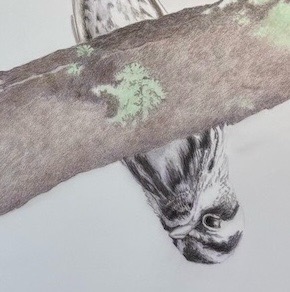
A surprising range of colors comes into play for this little Black-and-White Warbler.
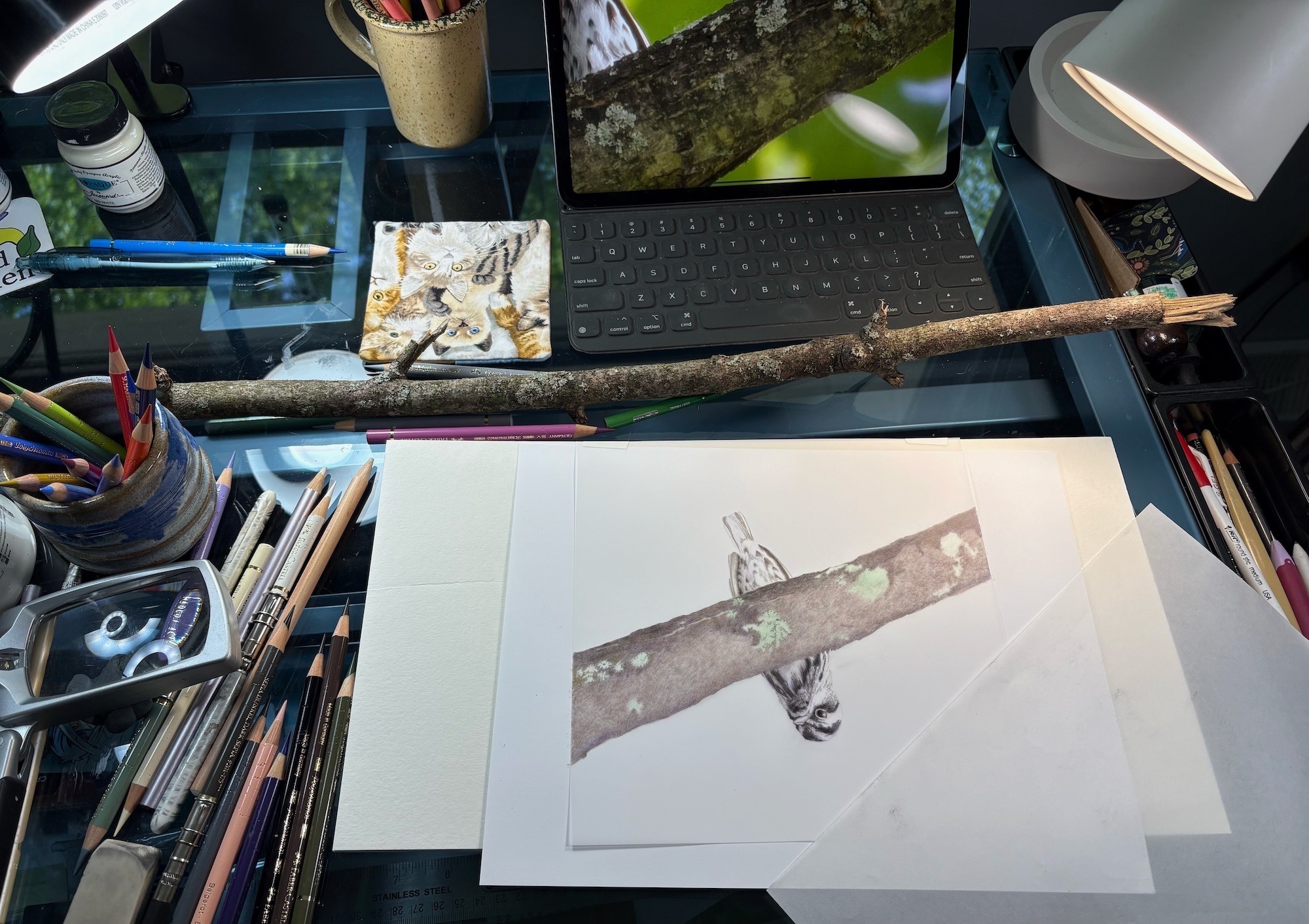
When I’m asked about my artistic process, I usually start with the unique substrate I use. I learned to illustrate on drafting film from artist Susan Rubin in her classes at the Denver Botanic Gardens. Susan creates beautiful botanical paintings on this surface. I’ve been using it for almost 10 years to illustrate birds and botanicals.
Similar to vellum but inexpensive and manmade, drafting film can be frosted on one or both sides and has enough “tooth” to hold the colored pencil pigment. The film is translucent, which makes it ideal for layering over mixed media. I can also layer elements on top of it. I purchase double sided matte Mylar from Meininger’s, one of my favorite art supply stores in Denver.
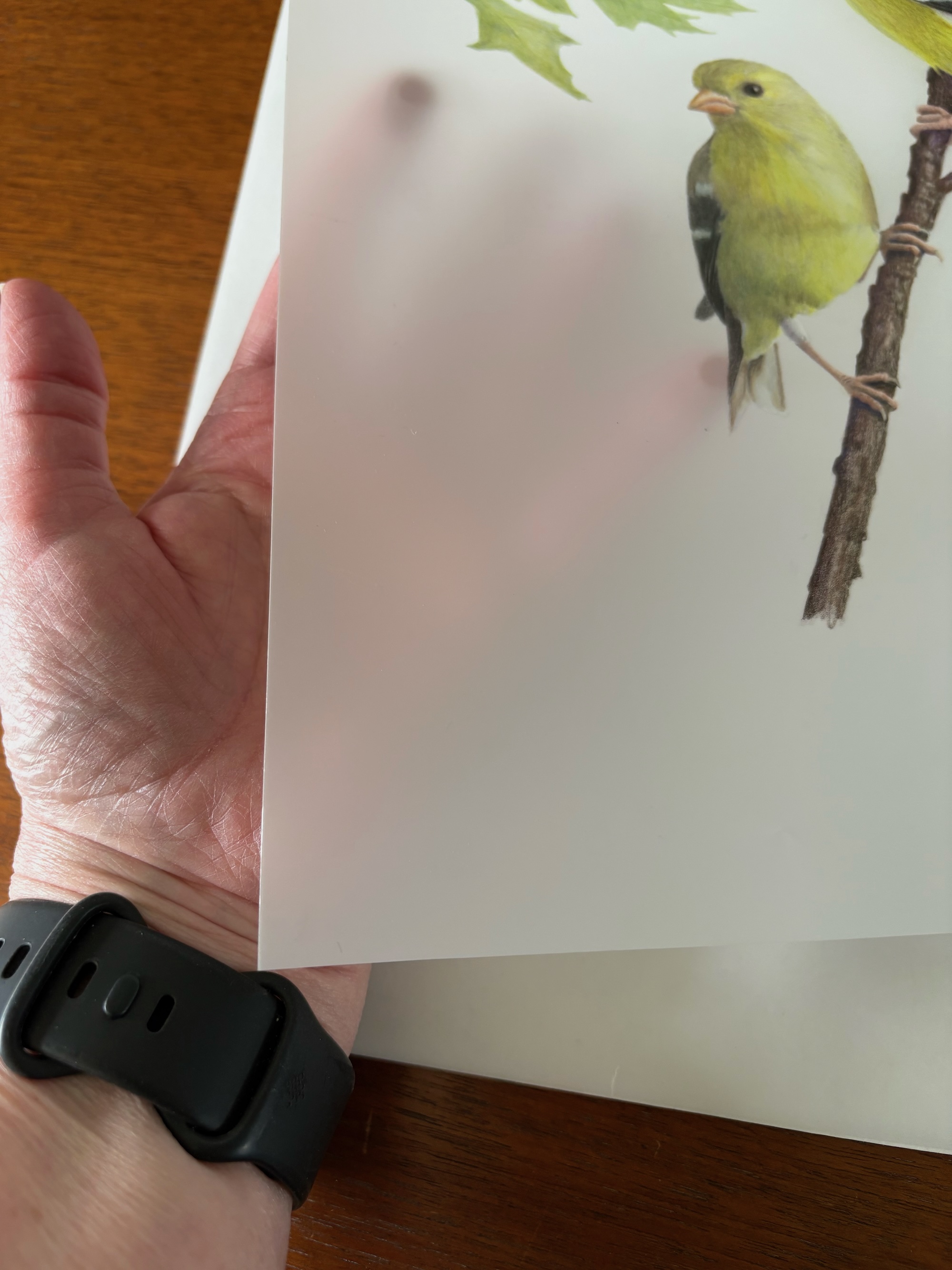
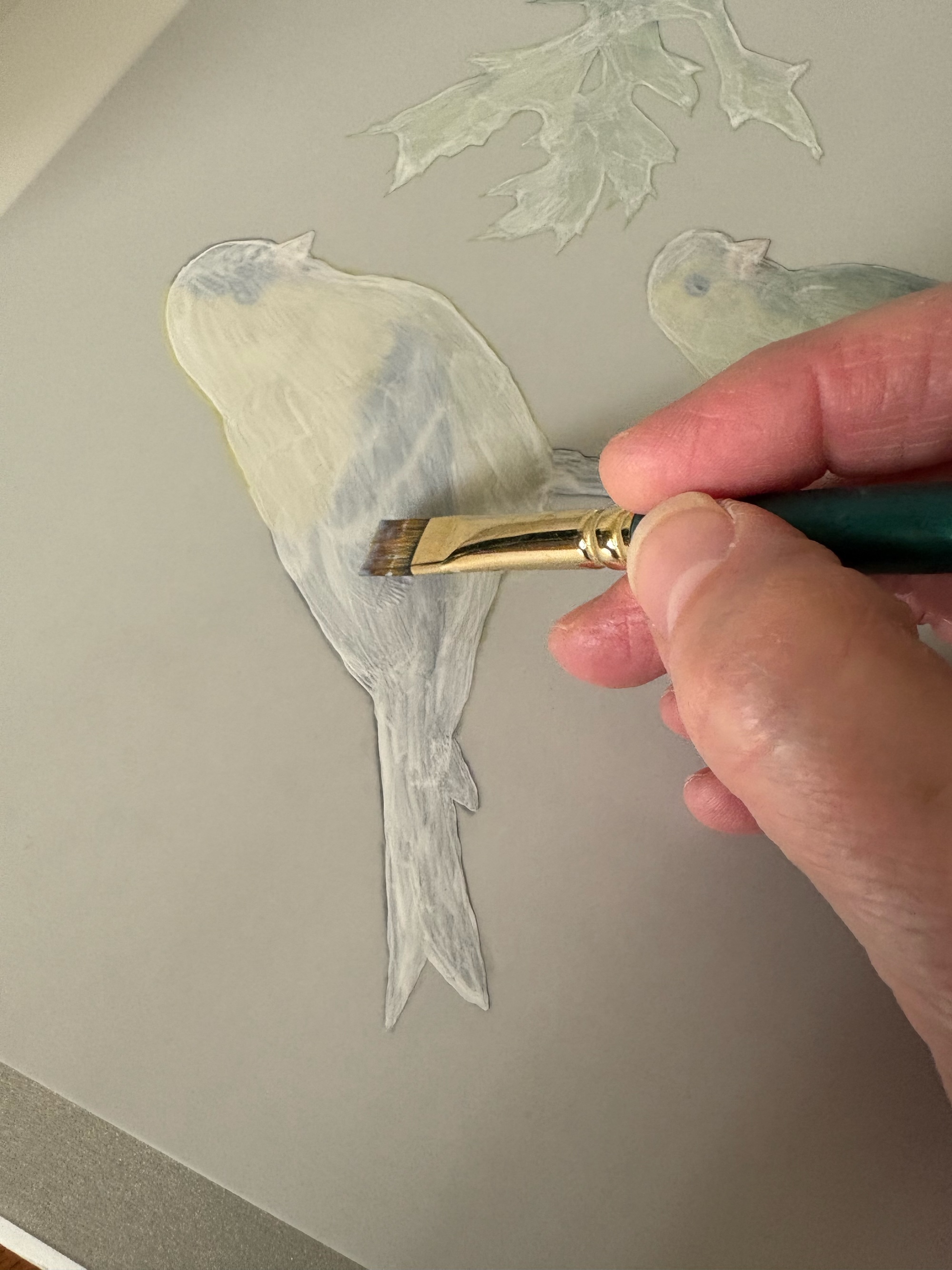
An important step in this process is to mask the reverse side of my illustration to make it opaque. I use Jacquard Neopaque white fabric paint applied with a variety of standard acrylic paint brushes. Because the paint is flexible when dry, it won’t crack if I bend the drafting film during finishing, mounting and framing.
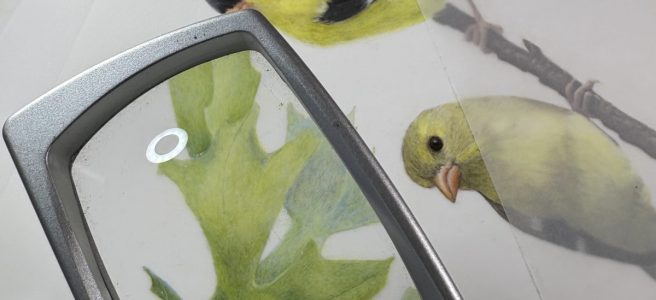
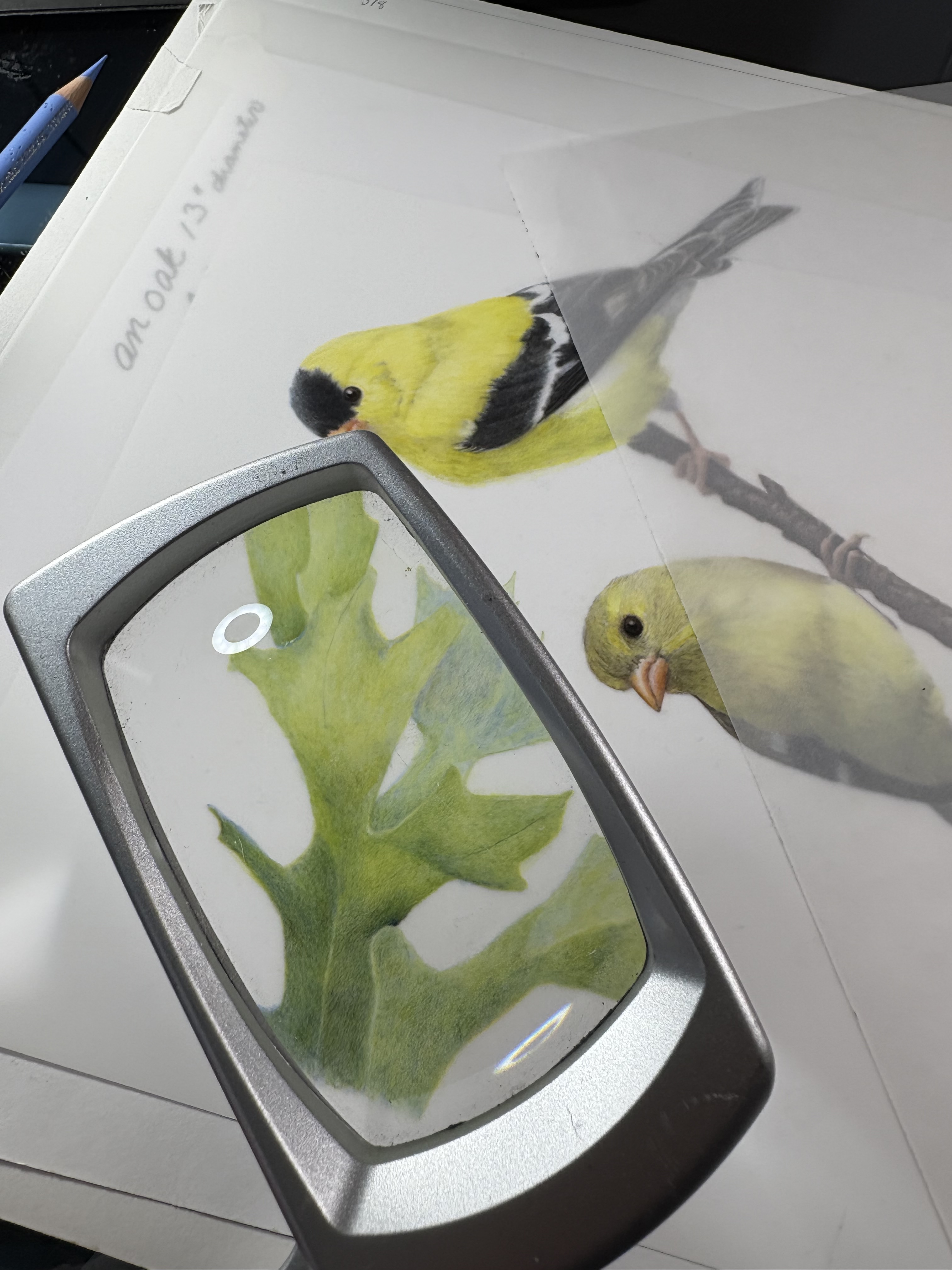
Working with a lens helps me fine tune the details. This piece is almost ready for cleaning, masking and layering.
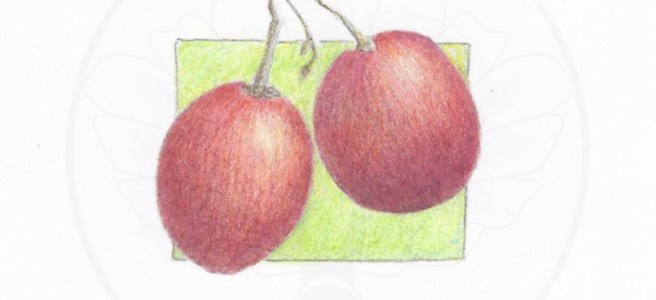
Today I’m posting a short video for my colored pencil class. We’ve been having fun with small botanicals and geeking out over pencil sharpeners. I love to see people in the zone with their artwork, so rather than interrupt them with a two-hour demo, I compressed the process into a three-minute time-lapse. Whew!
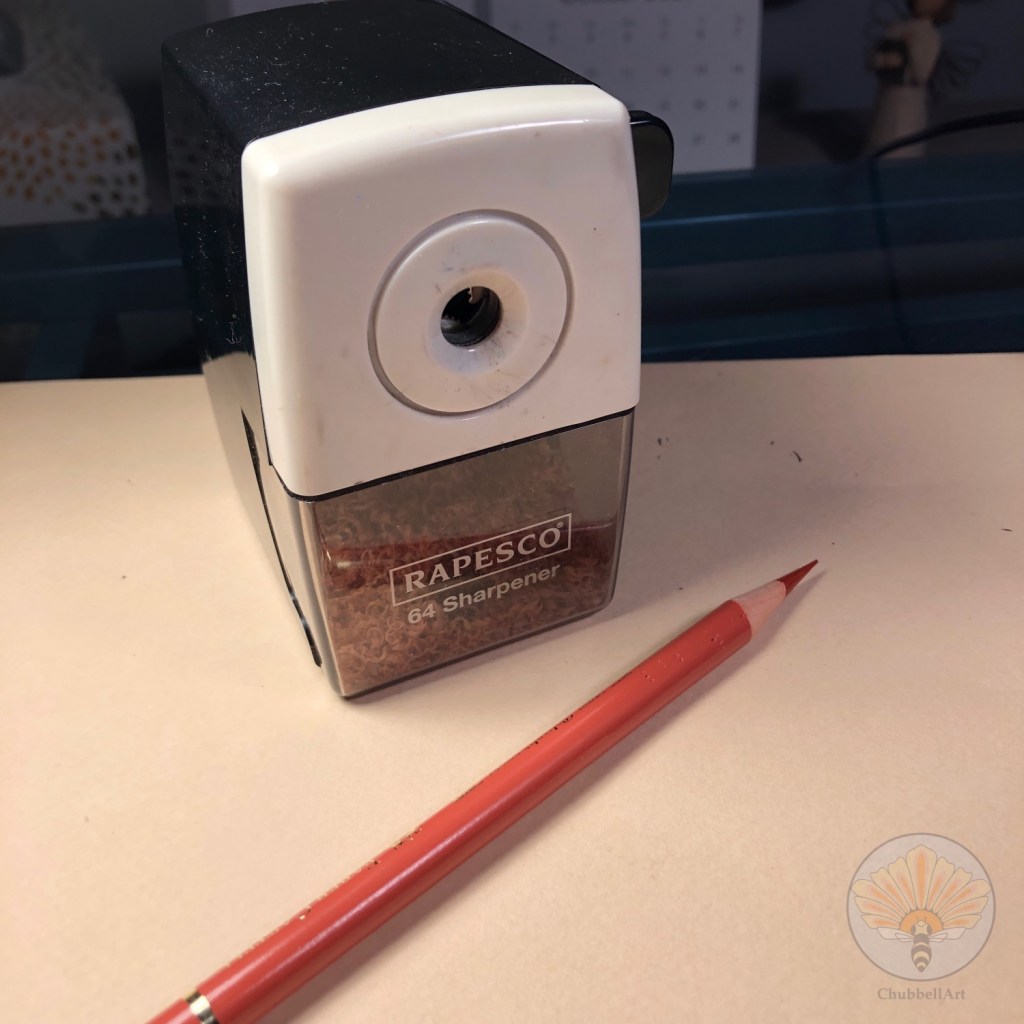
For my grapes, I chose seven colors that often show up in 12-pencil sets: white, yellow, purple, brown, red, light blue, and light green. (For my fellow pencil geeks, I’m using Faber Castell Polychromos White 101, Cad Yellow 107, Magenta 133, Walnut Brown 177, Light Cad Red 115, Light Ultramarine 140, and Light Green 171.)
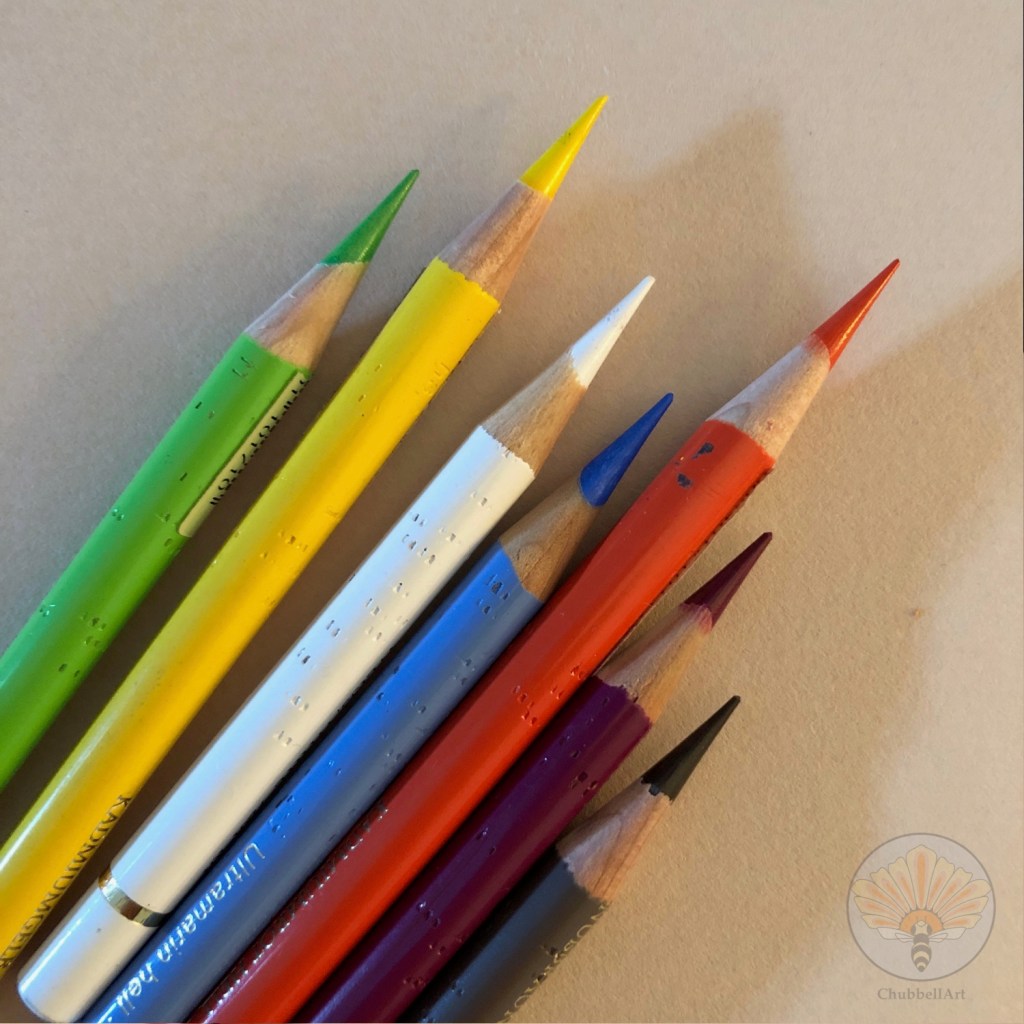
Grapes are easy to draw and fun to paint. This is your invitation to head over to the fruit bowl, bring some grapes to your sketchbook, and paint along. Oh – and sharpen those pencils to a long point!
If you’re following my blog, you may not know that I’ve begun publishing a monthly newsletter to showcase new art and events. You can only get the good stuff by signing up. The September newsletter contains a coupon for $10 off any 2 items in my Etsy shop, so don’t miss out!

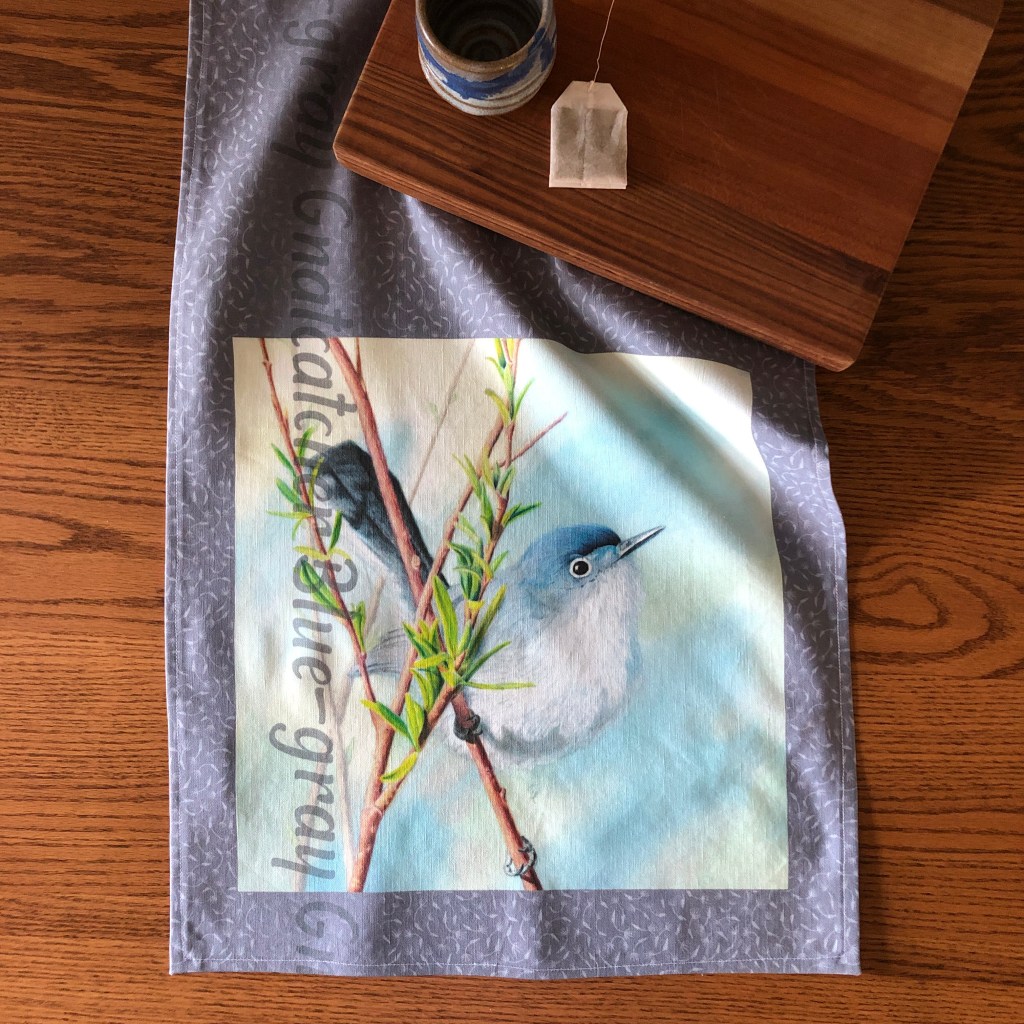
New prints, plus close-out prices on my original prints and tea towels.
Way back in the days before many of you were born, newsletters were mimeographed and sent out by snail mail. The mimeograph machine was really fun to use. It printed duplicates with purple-blue ink, the paper slightly damp with an addictive smell. You could zip out endless copies. They were popular in schools – cheap to buy and operate.

If you had access to a mimeograph machine (perhaps in your church office), you could publish your personal news (hello, Christmas letter!). Fax machines were the next level of broadcasting. All you needed was a string of phone numbers to send spam and jokes over the phone lines to your friends at other businesses. Office managers loved it.
As the internet grew, email emerged as the perfect vehicle for dad jokes, long chains of confusing conversations, and personal news. That was roughly 30 years ago. And despite the dizzying pace of new communication channels, we still rely on email to communicate our ideas to friends, customers, and coworkers. And we’re still using HTML, which I’ve learned and forgotten more times than I can count.
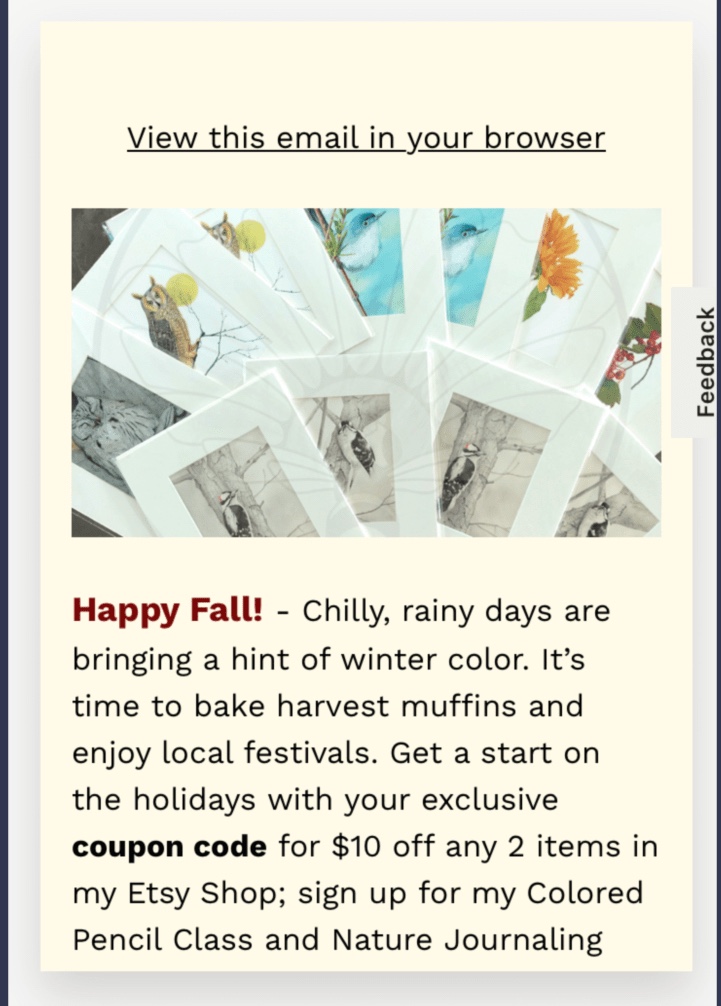
Luckily, since I started using Mailchimp’s email builder, I’ve been able to produce nice-looking html emails for my ChubbellArt friends. Sign up for this once-a-month e-blast, and I’ll try to stick in some fun things, like coupons and coloring pages. So much better than a fax!

The sound seems to drift down from the heights of the tall trees. It’s a dreamy, lazy buzzing, rising and falling in volume, and tapering off to be picked up again in a slightly different place. Growing up in Indiana, it was the background sound to the “dog days” of summer. I can’t separate my memories of freezer pops and visits to the Lake from the thrumming sound of the annual cicadas.

Our yard (3 acres of weedy grass, silver maple and black walnut) is revealing its wealth of insects this year (and other critters). Along the tree lines, I’m delighted by flying bugs, bees, spiders, and dragonflies. I discovered a tree frog sheltering from the sun, and rescued a handful of hungry monarch caterpillars that would have starved where they hatched. I moved them to bigger fare.
Gratitude seems like a small word to exchange for this bounty of wonders. I get to play out of doors as part of my job, and then generate something lovely from that play. The hours I spend outside observing, recording, watching, and listening are as important as the hours I spend in the studio creating, drawing, composing and rendering.

A new project is emerging from my summer’s work, as I process a deep dive into nature and local history. It combines my fine art paintings with genealogy and environmental education. You can follow along as I develop the project in upcoming posts.
In the mean time, the first two pieces are almost complete. The first is called “Place of Beginning,” and reflects our move back to Indiana. The text is a partial legal description from our mortgage documents. This bird is emerging from chaos (have you ever moved across country?). It’s song is a clear bell coming from the storm of activity brought on by change.
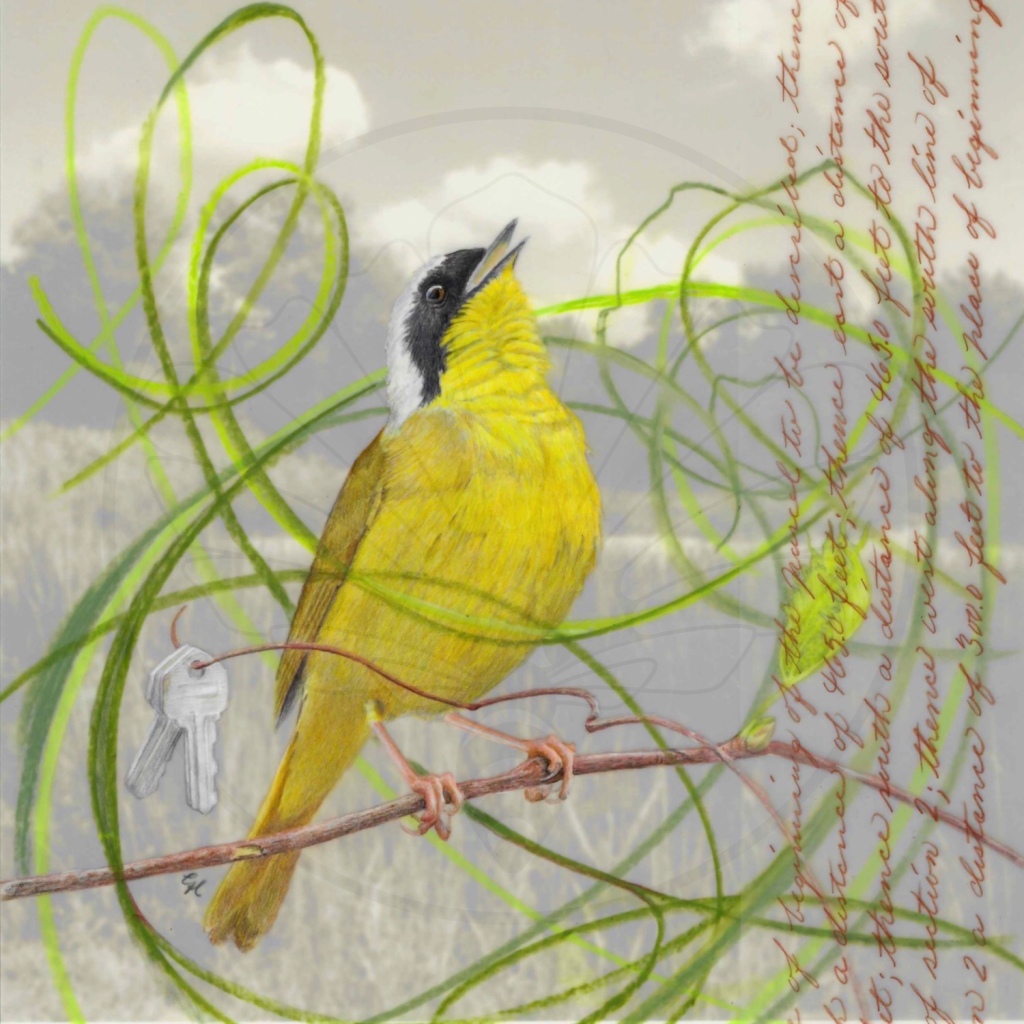
Each piece in this new project will incorporate historic documents about a geographic location, feature, or region (such as the Kankakee River or the Indiana Dunes). The documents record changes in Northwest Indiana between the years of settlement (roughly 1830) to the first successes of the conservation movement in the early twentieth century (roughly 1925). I’m eagerly searching out diary entries, land survey notes, stories, poems and articles.

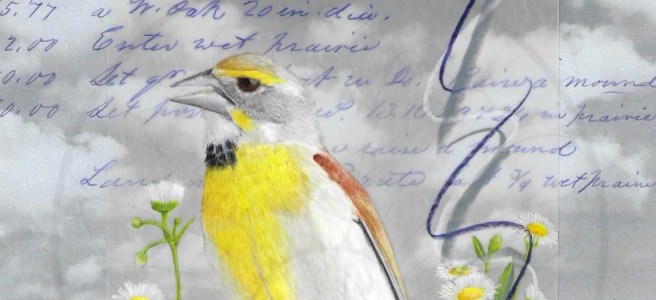
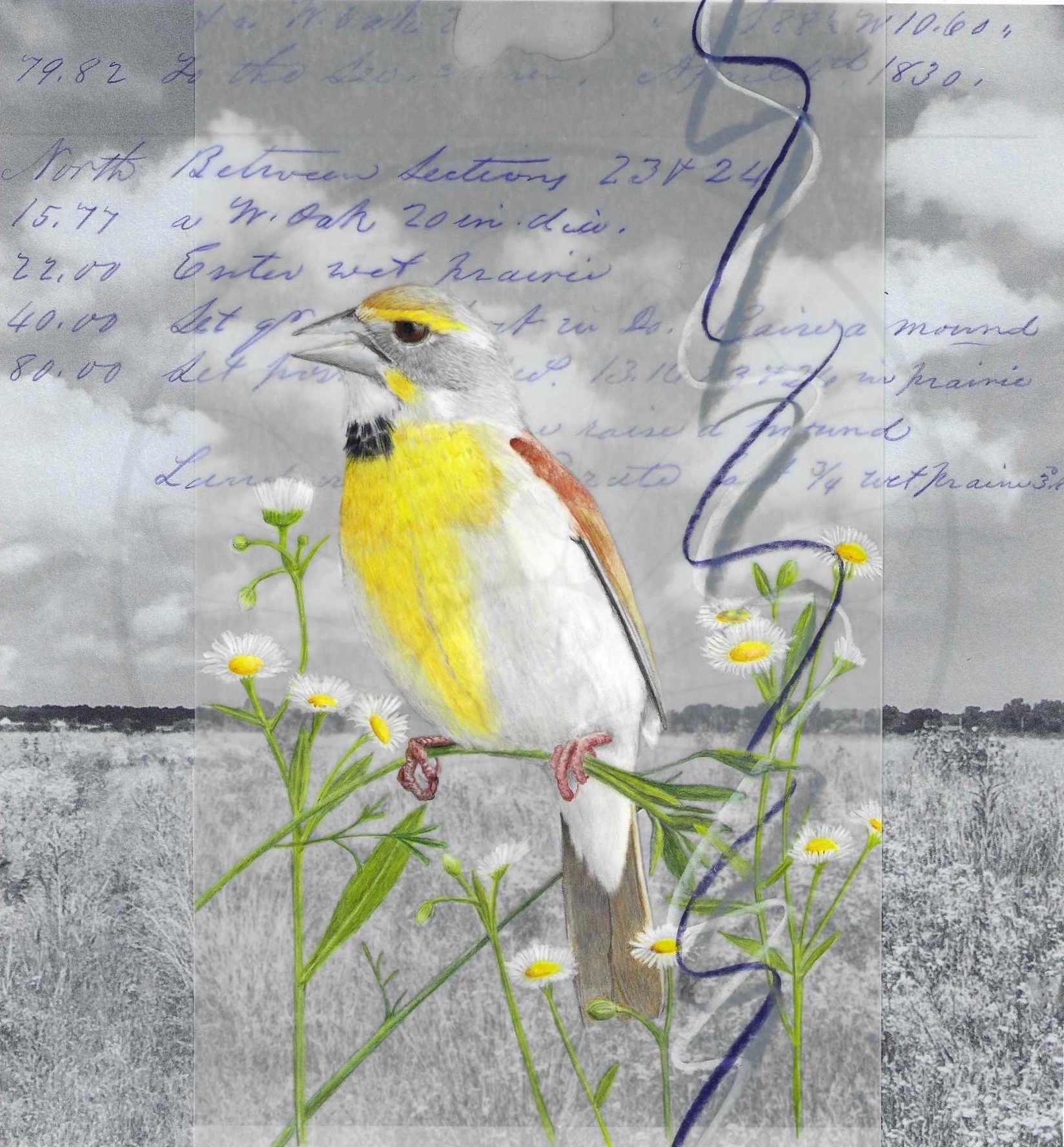
“Enter a Wet Prairie” explores the historic loss of habitat for grassland birds like the Dickcissel. The background photo is the restored prairie at Reynolds Creek Game Bird Area, and the historical document is the land survey note matching that location. Restoration efforts in Porter County are reclaiming land for tallgrass prairie, and there is hope that we can continue to enjoy grassland plants and animals into the future.
Thanks for making it to the end!. As a reward, please claim your free downloadable prairie kaleidoscope coloring page!


Recently, my friend Kristina and I met at the Great Marsh Trail in the Indiana Dunes National Park for nature journaling. I expected sunshine, mosquitos, lots of birds, and overgrown trails. I didn’t expect small dramas to unfold as we worked. Nature is teaching me to pay more attention.
It can be hard to settle down to observing and sketching. It turns out you can’t bird, and photograph, and sketch all the same time! And then you want a better look at a swallow, or are distracted by sandhill cranes honking in the distance. Somehow we managed to settle in. A cooperative Common Yellowthroat returned several times to sing from a favorite perch. Kristina captured his confident posture and made a beautiful sketch of his surroundings (see her wonderful avifauna paintings at KristinaKnowski.com)

I had a long look at Canada Geese through my binoculars and enjoyed sketching them. They were rolling their heads at one another, and I wondered what they were communicating.

Clouds moved in and the wind picked up. We headed east, hoping to find a viewpoint into the next marsh and maybe a peek at the cranes. We passed a turtle and a frog on the trail. What did they think of each other?


On our way out Kristina noticed a noisy confrontation unfolding just off the road. A variety of bird species were agitated, but it was the Oriole making the most racket. He was harassing a pair of red-shouldered hawks. I saw the female come in once, and we spotted a feisty robin approach, but otherwise the Oriole was on his own. We didn’t stay to see who won, but I left with loads of questions.

Observation opens our curiosity in ways that can only be satisfied with more observation. Were the frog and turtle “together” on the trail? Or were they coincidentally moving from the wet marsh to drier land? Maybe we happened on a favored crossing zone. Had the hawks eaten recently? (They seemed disinterested in the kerfuffle they were creating.) How often do the hawks visit that spot?
Unanswered questions, excellent company, and a beautiful day are now woven into the pages of my journal, and I’m grateful for the ability to be aware and present in nature. I’m sure I’ll enjoy this rich set of memories during the darker and quieter days of winter.
For me, March is the opening of the creative season. As the studio fills with new ideas, the world pivots from darkness to light, from the quiet waiting of Winter to full-throated Spring. It’s a good time for reflection. My artwork continues to evolve, but with familiar components—a love of beauty, a prayer for conservation, a hope of connection.

My recent colored pencil paintings capture imaginary wildlife encounters in human spaces, blending storytelling with natural science illustration. They place birds in human-made settings, echoing the role we play in shaping and controlling wildlife habitat. I’m never sure where the whimsy comes from, but I need that playfulness to round out my compositions.
I created “Folly” in response to seeing nesting Cerulean Warblers at a birding festival. Through the scope, we watched the male and female tending their nest, tucked in the crook of a branch about 20 feet directly above a busy trail. It reminded me that birds have a precarious life, often struggling to succeed in challenging conditions.
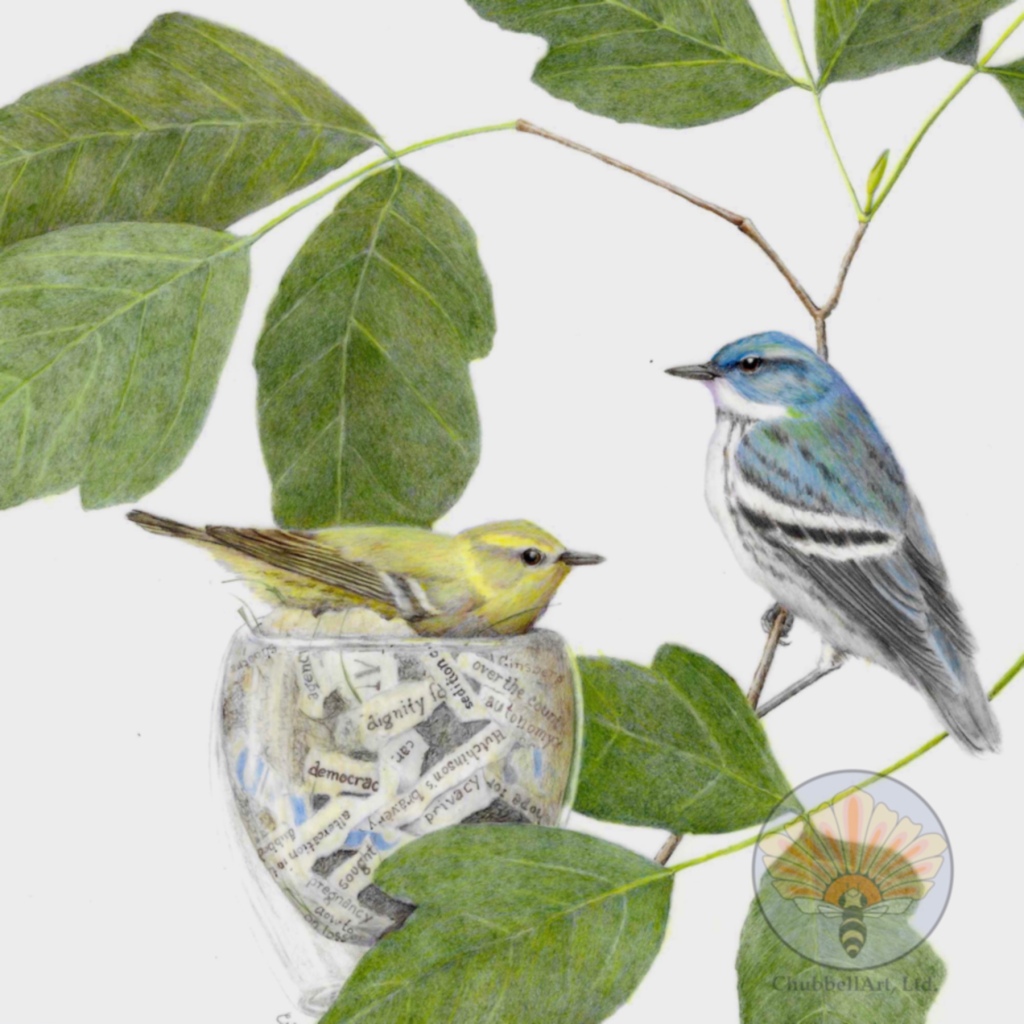
I illustrated the nest as a glass cup filled with the news of the day, a fragile and potentially disastrous choice. I surrounded them with Poison Ivy, which has a dual nature. It’s terrible for us, but beneficial for birds. I titled this piece “Folly” because foolishness is a good place to begin any journey. In foolishness we find the confidence to trust we’ll find what we need along the way.
I don’t know where my muse is taking me this year, but if it’s a Fool’s Journey, it’s bound to be interesting.
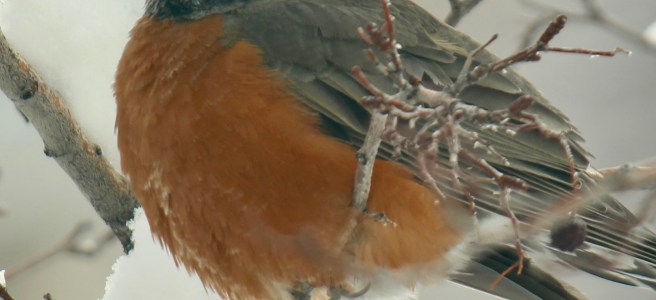
When the weather was too poor this winter for outdoor sketching, I set up my drawing supplies on the porch, plugged in the space heater, and worked on sketching birds from life. I found the chickadees and finches very challenging. Why couldn’t I observe some sleeping ducks on a pond instead? But the most convenient, numerous collection of live birds was right there on the other side of my window.

So I worked, and struggled, and wondered how anyone completes an actual sketch of a bird in the field. I started with basic gestures, borrowing ideas from books, blogs, and videos. I knew I could draw from photos, but I wanted to be able to complete a finished-looking sketch during my sketching session. Then I found a bit of helpful advice: build your memory.
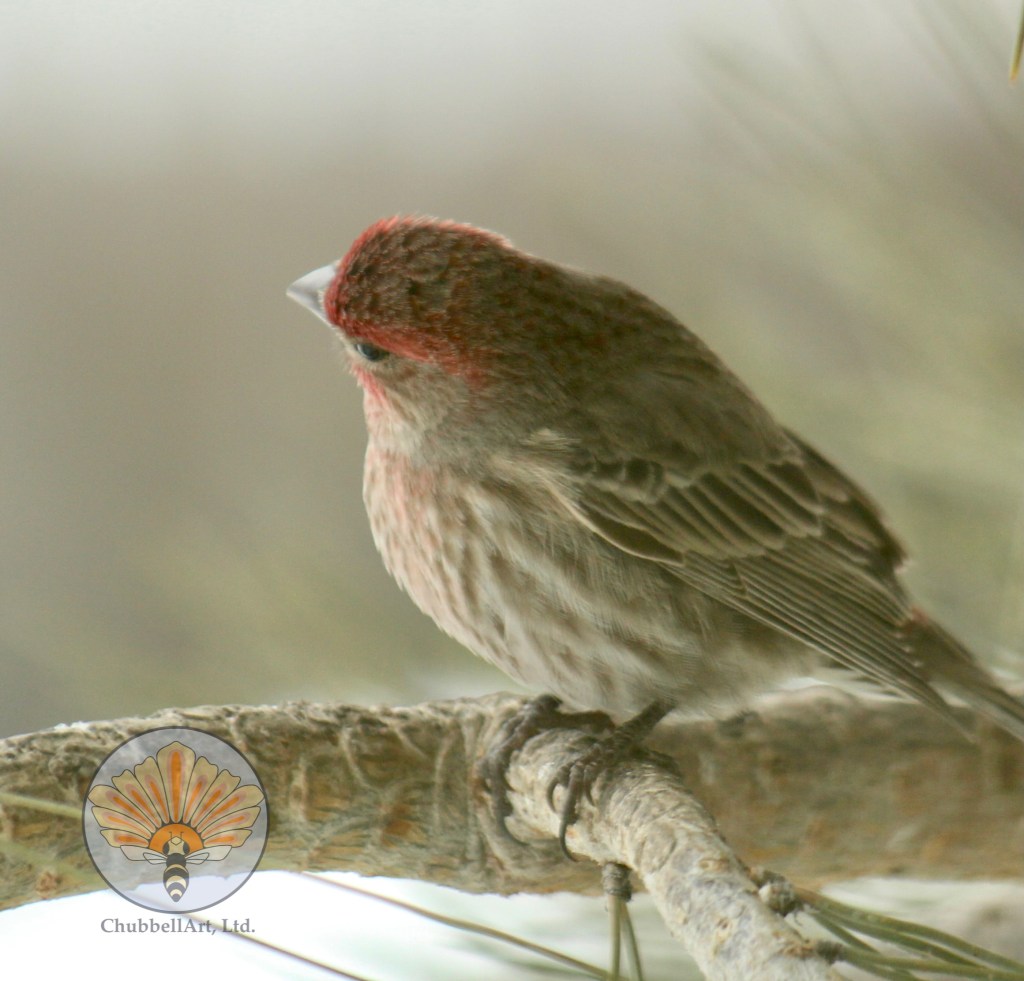
Hmmm, I thought. I guess I should memorize the shape of that finch bill. But no, it’s not like school. I couldn’t memorize a set of visual facts. Putting the right information into memory requires repeated drawing from life, which enhances both my observation and drawing skills.
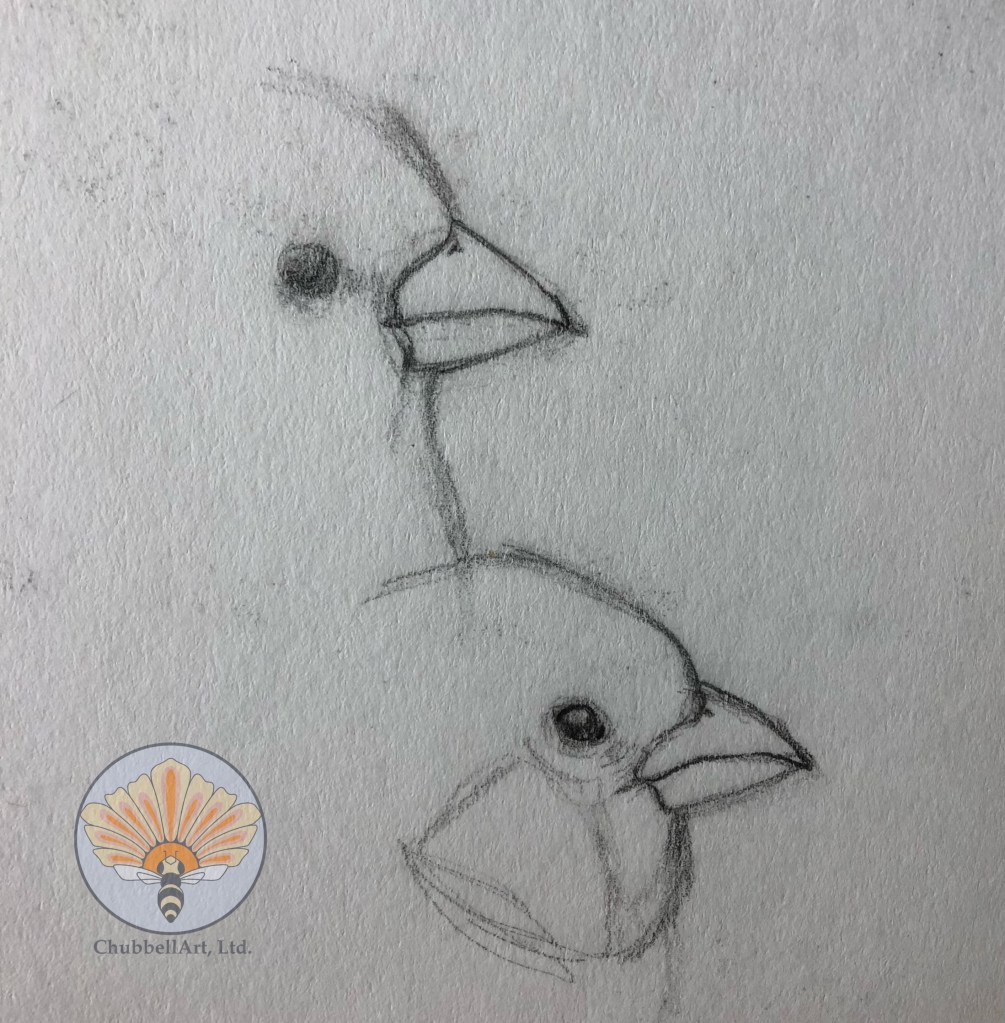
When I realized that the practice itself would build my memory and make sketching faster, I stopped struggling. Drawing from life is recommended by successful bird artists like John Busby and William T. Cooper. Busby was a British wildlife artist, educator, author, and a founding member of the Society of Wildlife Artists. He described bird sketching as a long-term practice:
Encounters with wild birds are usually measured in split-seconds, and one is rarely given another chance to react…It does take time to learn to draw quickly and a good memory and a high-speed response is something to cultivate…there is much that can be done to sharpen observation and fix events in your memory.
John Busby, Drawing Birds Timber Press, Second Ed 2006
William T. Cooper was a prolific Australian bird illustrator who worked from life. Here he explains the experience of developing a working memory of your subject:
Drawing from life is very important: it allows much more information to penetrate the mind than when copying from a photograph. This information enters the subconscious and will be drawn upon when required some time in the future.
William T. Cooper, Capturing the Essence, Techniques for Bird Artists Yale University Press 2011
He makes it sound almost magical. And I’m discovering an ease to developing these skills when I stop struggling and let the process unfold. I’m working on more responsive gestures while I let bird behavior and proportions seep into my brain. As I work more quickly, that thinking, left brain settles down, and I also feel more present.

It’s May now, and migration season in Colorado is in high gear. Western Tanager, Bullock’s Oriole, and Black-headed Grosbeak are competing with a small, noisy flock of Pine Siskin for seeds and oranges. What a delight to sit here for an hour working with the birds, gently encoding all that behavior, noise, and color into memory.
Saturday was incredibly warm, and a perfect day for the zoo. Though we love the animals and the hilly terrain of our local zoo, “Stout Month” at a favorite Denver brewery drew us north — to a city-scape of shirtless joggers, flip-flopped teens, and sun-soaked animals.
As soon as we passed the entrance gate at the Denver Zoo, we noticed two quiet dik-diks warming in the sun. Over the next two hours, I stopped for a minute or two every few feet, wedging myself into a little space in front of crowded enclosures. It was a nice “museum pace” that worked for me and didn’t bore my husband.

I found myself using each opportunity to try something different. When animals were backlit by the afternoon light, it was easy to read the shadows as abstract shapes and quickly put them in place to build form.

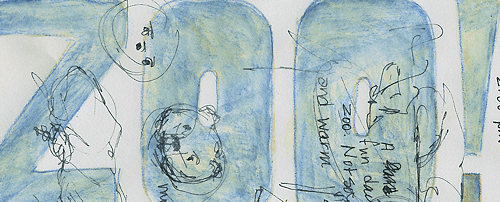
I tried to look more than draw, concentrating on understanding proportions and shape relationships. As a result, I made lots of blind contour scribbles. This was a great exercise, but I was messing up my journal.
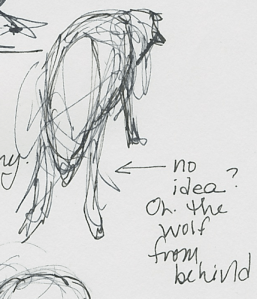
I was tempted to rip out these five pages. I also wanted to keep my memories of a lovely day at the zoo. Back at home, I decorated the pages with watercolor pencil, and I think that’ll do the trick for me. This fits better with the neat-freak vibe of the rest of my journal, and the words reflect what I was thinking about while I sketched.


It won’t be long before warm weather returns, and we’ll visit our own Cheyenne Mountain Zoo. After all, it’s a short trip from the zoo to another favorite watering hole – the excellent Bristol Brewing tap room.
 Christine Hubbell