This Mile a Swamp

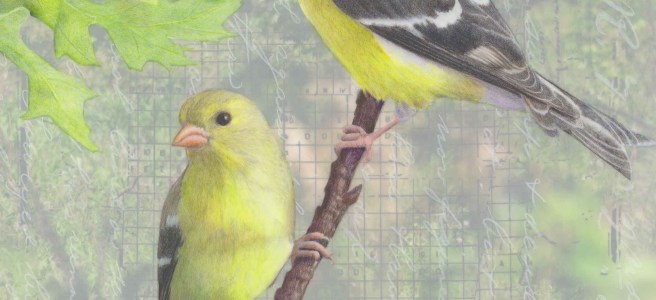
We love the feisty American Goldfinches at our winter feeders. They’re acrobatic, noisy, and occasionally fierce. By the middle of May, the males will sport banana yellow breeding plumage. That color was a challenge to capture in colored pencil. This pair is at home along Indiana roadsides–a habitat with a lot of history.

In the early 1800s, federal survey teams in Northwest Indiana mapped waterways, recorded natural resources, and marked the grid-like boundaries of land parcels. Each parcel was given a legal designation: a section within a numbered township (north or south of a baseline) and east or west of a numbered range line (i.e. Section 6, Township 34 North, Range 7 West). These parcels were subdivided and sold by the United States Government. 

Land sales raised money for the government and accelerated expansion into formerly indigenous territory. By the late 1830s, native people in Indiana had ceded much of their land through treaties and coercion. Other efforts to remove native people from Indiana included the 1838 Trail of Death, during which 859 people were forcibly marched from Twin Lakes, Indiana, to Kansas, and 42 people died. During these years, homesteaders and land speculators eagerly expanded into Indiana, clearing trees and plowing the prairies. 

The landscape we see today is a legacy of the work of the early survey teams. Modern farms are separated by long country roads, hedgerows, and weed strips. When the land was cleared in the 1800s, wildlife likely struggled with deforestation and the loss of wetlands. The location recorded in this piece was wetland before it was drained for agriculture. But birds like the American Goldfinch have adapted well to disturbed areas, open fields, and the seeds of edge-environment weeds. Today they are widespread residents of fields and gardens.

This piece is available for purchase. Please contact me for pricing.

Under the Reading Lamp

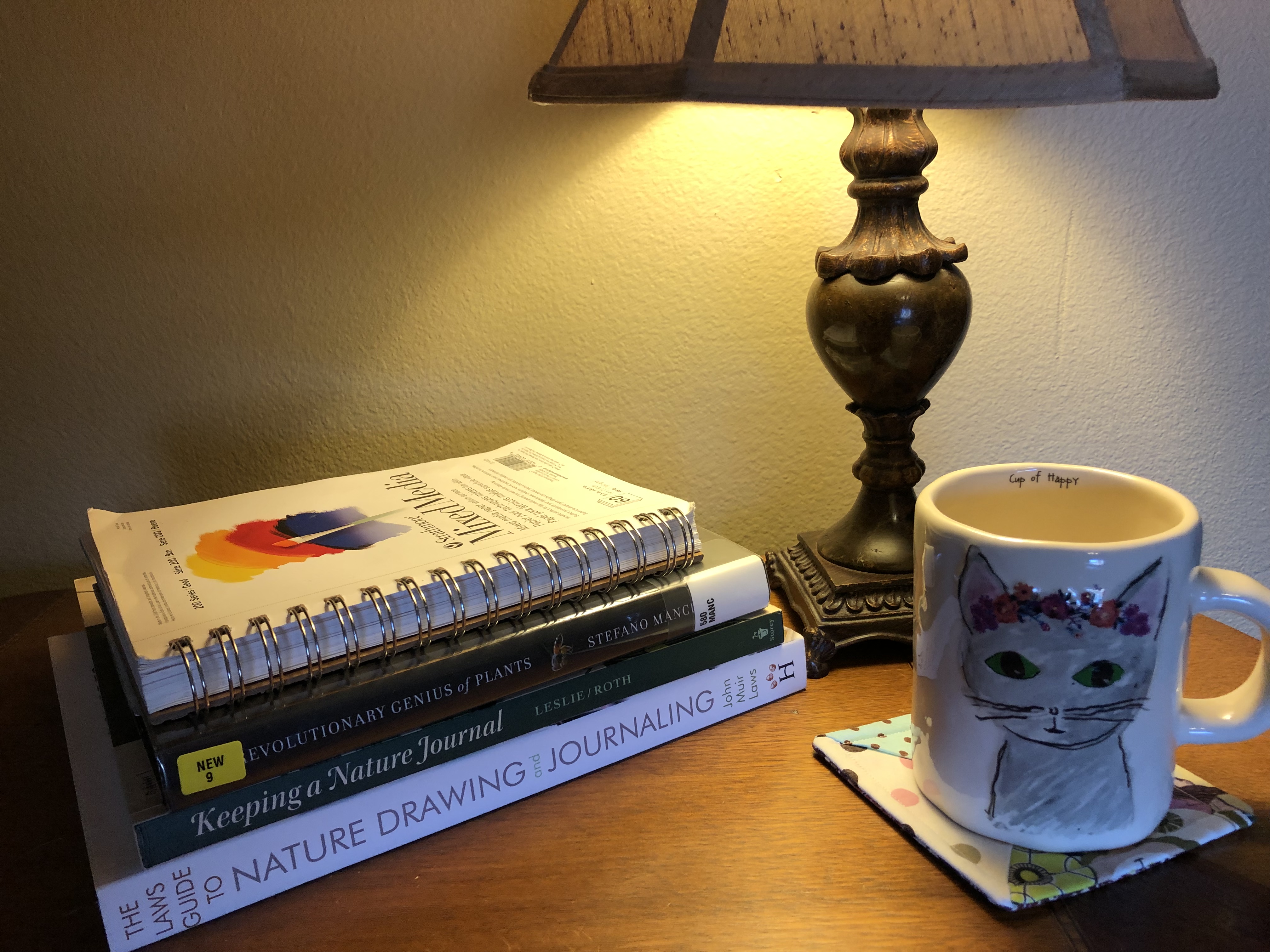
If you’re anywhere in the northern United States today, you’re probably experiencing dangerous cold. It’s the perfect time to take shelter with a good book. Here are three books on nature and art that are absorbing my interest this week.

The Revolutionary Genius of Plants by Stefano Mancuso

What a delight to breeze through this exploration of how plant adaptations can inspire us to achieve our very human needs and desires. I kept saying to my husband “this book is crazy!” But I also kept reading, even after Dr. Mancuso argued that plants may have a form of vision. No kidding. There are wonderful stories here about how plant structure informs some of our most creative architecture or how the decentralized organization of plants could teach us to create robust democracies. I’ve always been more into birds than plants, but this book could tip the balance in favor of plants.

Keeping a Nature Journal by Clare Walker Leslie and Charles E. Roth

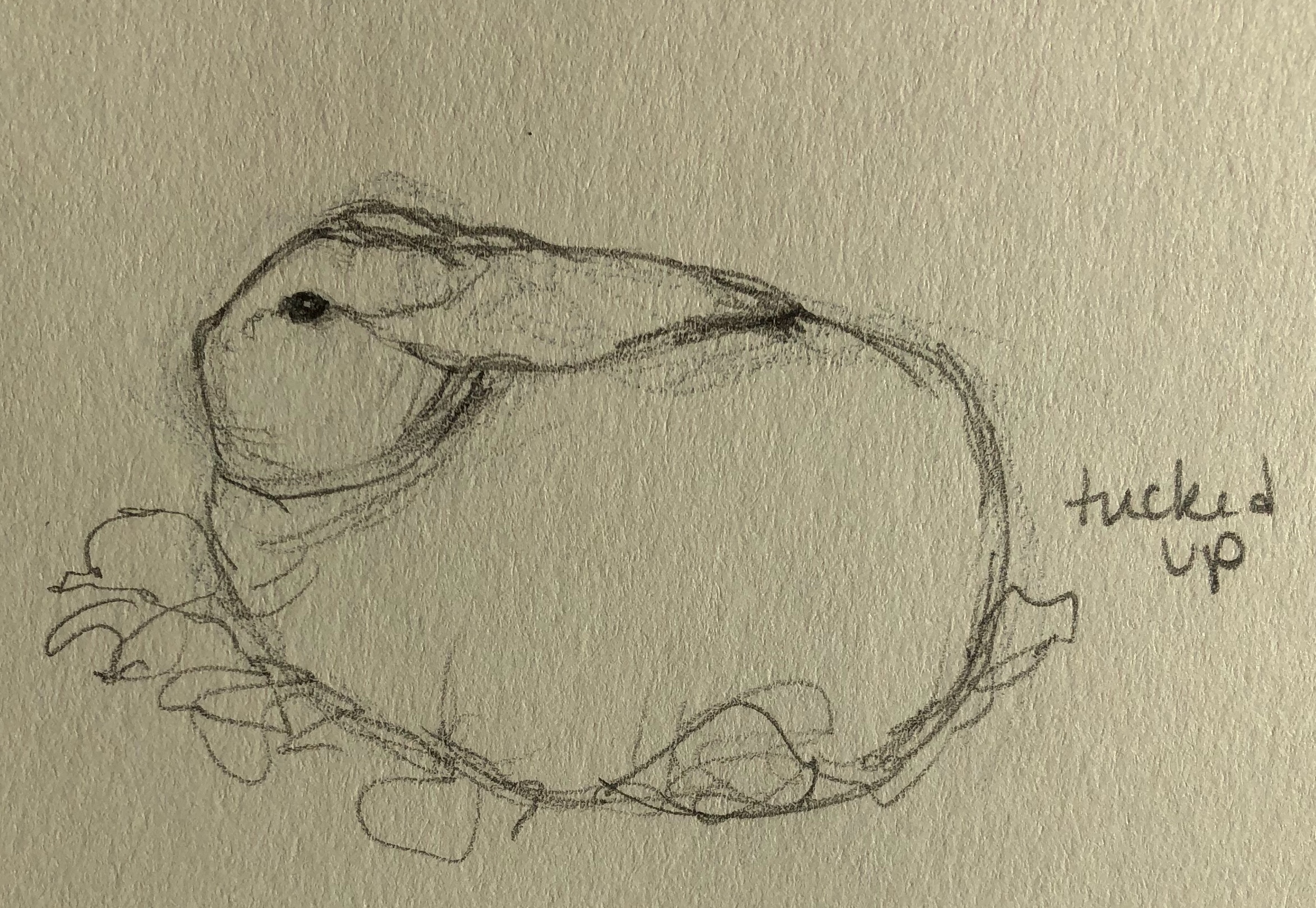
I spent a happy half hour on my chilly porch sketching our resident rabbit and a few end of day birds with this book at my side. Leslie and Roth encourage readers to begin where they are by observing everything around them and recording it with any available tools. The object is to connect to the natural world locally, by exploring our cities and neighborhoods and parks without judgement. It’s the perfect message I hope to carry into the sketching workshop I’ll be giving in May, plus my sketchbook is filling up with happy observations.

The Laws Guide to Nature Drawing and Journaling by John Muir Laws

I love this comprehensive guide to drawing from nature. At 300 plus pages, it’s hard to imagine anything Laws hasn’t covered. From how to observe nature (including how to estimate groups of birds) to contextualizing observations by including maps and landscape sketches, there is enough material here for a lifetime of study. Because I struggle with page composition in my sketchbooks, I skipped to that section and picked up some good tips. It’s that kind of text – dip in and find what you need or absorb it cover to cover.

The arctic temperatures may be ending, but we’re not quite done with winter. So stay warm, make some art, and keep reading!

Got a good nature or art book to share? Post a comment!