A surprising range of colors comes into play for this little Black-and-White Warbler.
Art & Illustration
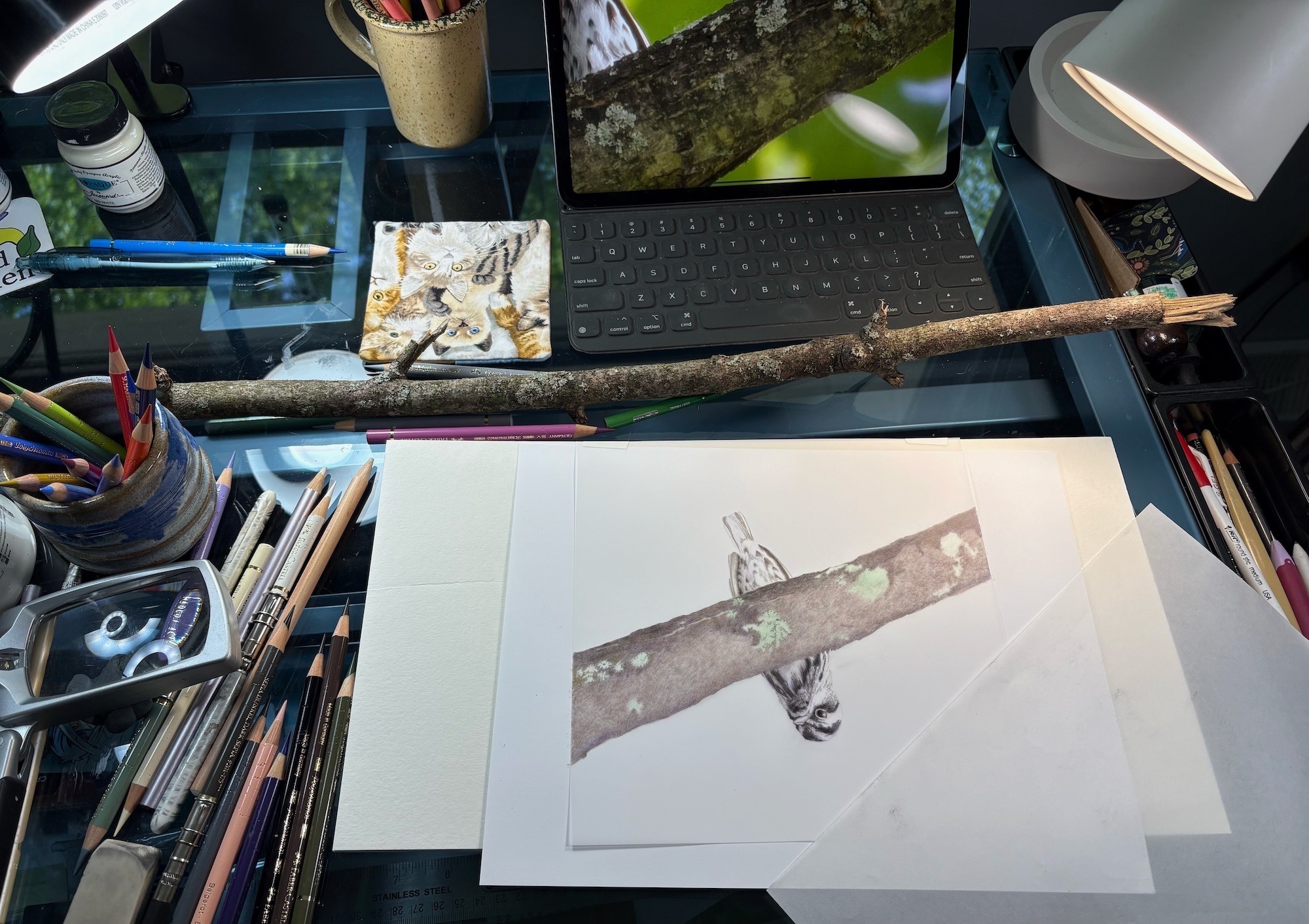
A peek at works in progress
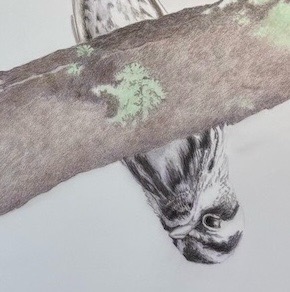
A surprising range of colors comes into play for this little Black-and-White Warbler.
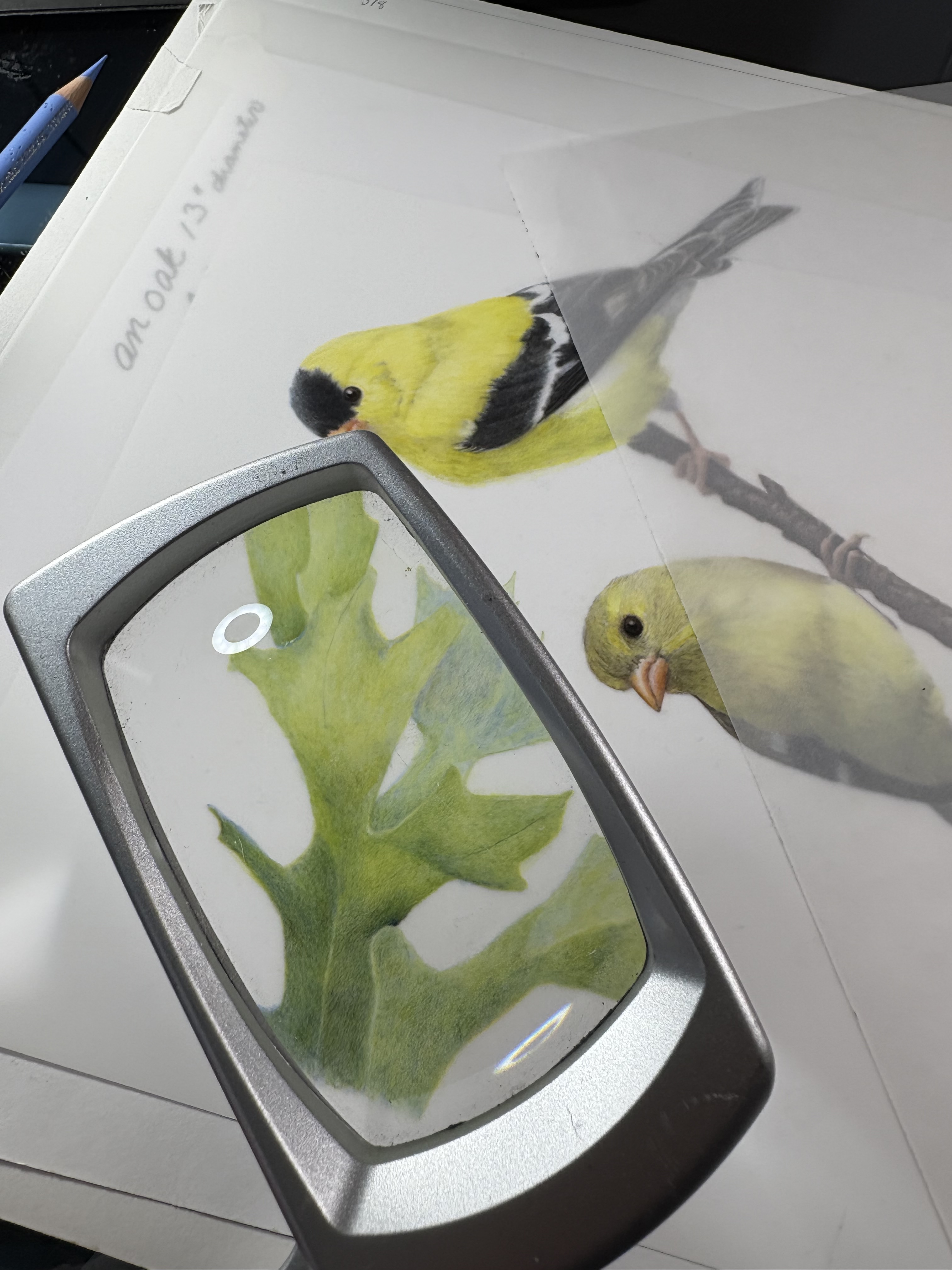
Working with a lens helps me fine tune the details. This piece is almost ready for cleaning, masking and layering.

The sound seems to drift down from the heights of the tall trees. It’s a dreamy, lazy buzzing, rising and falling in volume, and tapering off to be picked up again in a slightly different place. Growing up in Indiana, it was the background sound to the “dog days” of summer. I can’t separate my memories of freezer pops and visits to the Lake from the thrumming sound of the annual cicadas.

Our yard (3 acres of weedy grass, silver maple and black walnut) is revealing its wealth of insects this year (and other critters). Along the tree lines, I’m delighted by flying bugs, bees, spiders, and dragonflies. I discovered a tree frog sheltering from the sun, and rescued a handful of hungry monarch caterpillars that would have starved where they hatched. I moved them to bigger fare.
Gratitude seems like a small word to exchange for this bounty of wonders. I get to play out of doors as part of my job, and then generate something lovely from that play. The hours I spend outside observing, recording, watching, and listening are as important as the hours I spend in the studio creating, drawing, composing and rendering.

A new project is emerging from my summer’s work, as I process a deep dive into nature and local history. It combines my fine art paintings with genealogy and environmental education. You can follow along as I develop the project in upcoming posts.
In the mean time, the first two pieces are almost complete. The first is called “Place of Beginning,” and reflects our move back to Indiana. The text is a partial legal description from our mortgage documents. This bird is emerging from chaos (have you ever moved across country?). It’s song is a clear bell coming from the storm of activity brought on by change.
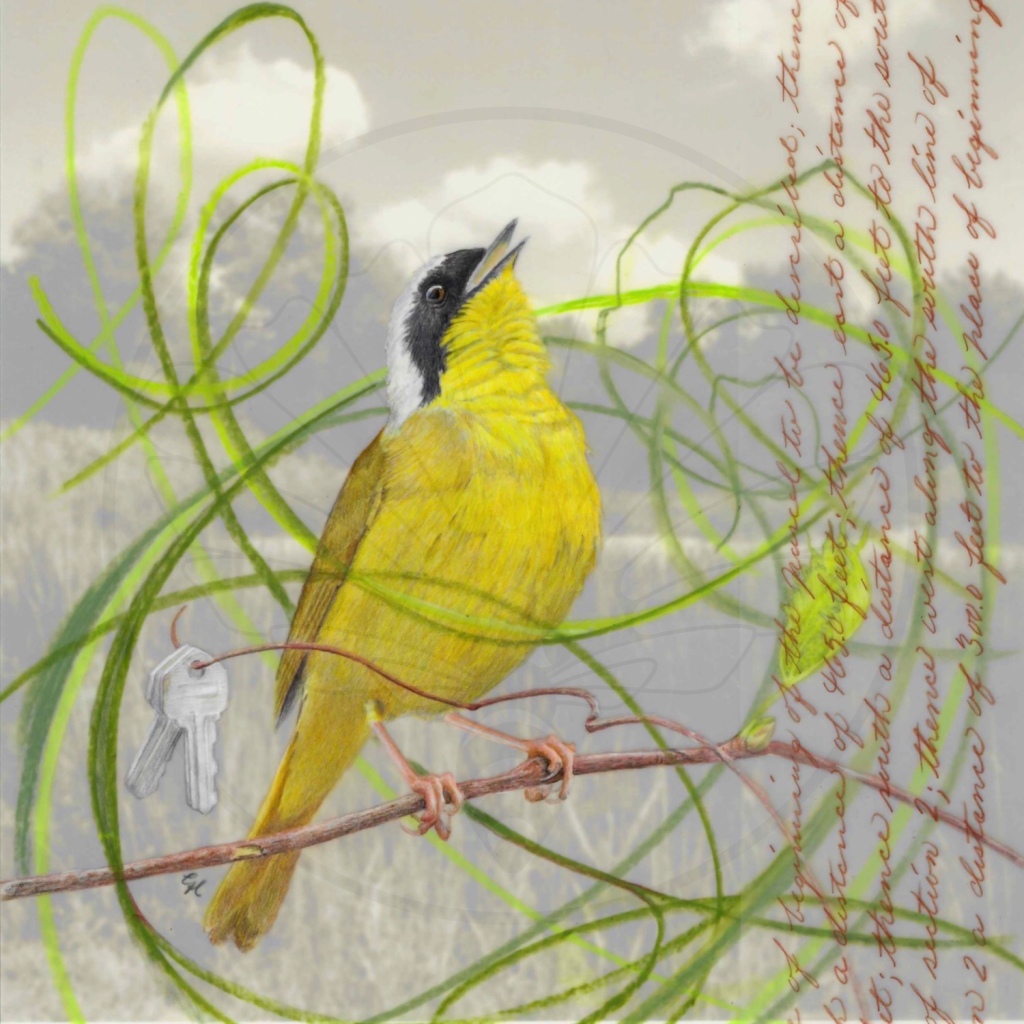
Each piece in this new project will incorporate historic documents about a geographic location, feature, or region (such as the Kankakee River or the Indiana Dunes). The documents record changes in Northwest Indiana between the years of settlement (roughly 1830) to the first successes of the conservation movement in the early twentieth century (roughly 1925). I’m eagerly searching out diary entries, land survey notes, stories, poems and articles.

“Enter a Wet Prairie” explores the historic loss of habitat for grassland birds like the Dickcissel. The background photo is the restored prairie at Reynolds Creek Game Bird Area, and the historical document is the land survey note matching that location. Restoration efforts in Porter County are reclaiming land for tallgrass prairie, and there is hope that we can continue to enjoy grassland plants and animals into the future.
Thanks for making it to the end!. As a reward, please claim your free downloadable prairie kaleidoscope coloring page!


For me, March is the opening of the creative season. As the studio fills with new ideas, the world pivots from darkness to light, from the quiet waiting of Winter to full-throated Spring. It’s a good time for reflection. My artwork continues to evolve, but with familiar components—a love of beauty, a prayer for conservation, a hope of connection.

My recent colored pencil paintings capture imaginary wildlife encounters in human spaces, blending storytelling with natural science illustration. They place birds in human-made settings, echoing the role we play in shaping and controlling wildlife habitat. I’m never sure where the whimsy comes from, but I need that playfulness to round out my compositions.
I created “Folly” in response to seeing nesting Cerulean Warblers at a birding festival. Through the scope, we watched the male and female tending their nest, tucked in the crook of a branch about 20 feet directly above a busy trail. It reminded me that birds have a precarious life, often struggling to succeed in challenging conditions.
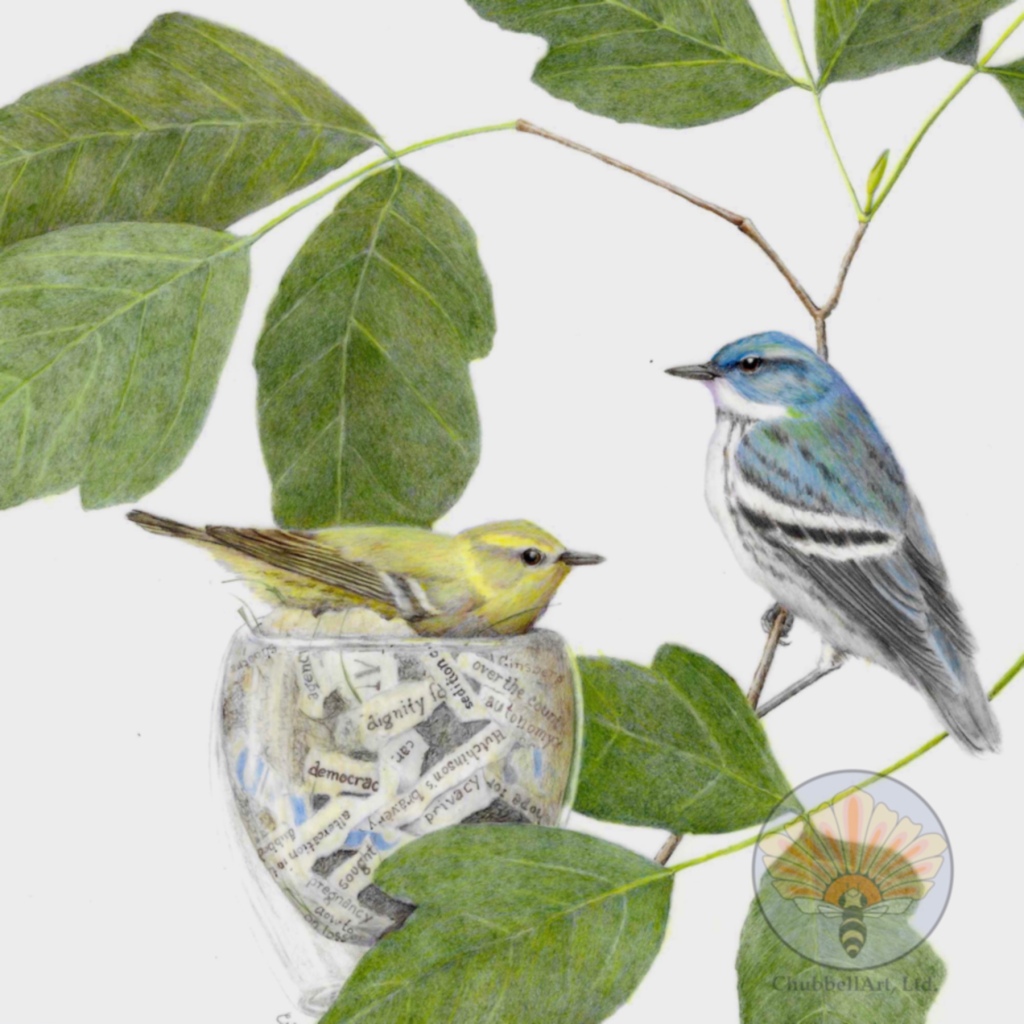
I illustrated the nest as a glass cup filled with the news of the day, a fragile and potentially disastrous choice. I surrounded them with Poison Ivy, which has a dual nature. It’s terrible for us, but beneficial for birds. I titled this piece “Folly” because foolishness is a good place to begin any journey. In foolishness we find the confidence to trust we’ll find what we need along the way.
I don’t know where my muse is taking me this year, but if it’s a Fool’s Journey, it’s bound to be interesting.
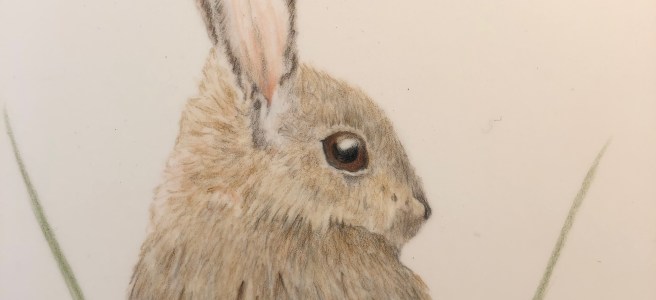
Baby bunnies are all ears and bellies. To celebrate the Year of the Rabbit, I’ve just completed three eastern cottontail illustrations based on my photos. May is a reliable time to watch for these tiny foragers, who will taste almost everything in the garden. We were entertained by their zippiness, which I suppose kept them from being taken by hawks and owls. We weren’t so fond of their appetites. They especially loved my Firewitch Dianthus, and I hardly got to see it bloom once the bunnies arrived. I’ve illustrated them with phlox, another of their favorites. Which bunny would you choose?

Originals and prints will be available soon. Please use the contact page if you’re interested.
I understand why we use the beginning of the year to make a fresh start. The holidays are behind us with their noisy chaos and overindulgence. Closets and arteries need cleansing. And even at the end of January, the calendar still has a compelling sense of possibility.
But I don’t want to race ahead. I’ll be very grateful for spring’s renewing energy. I just want to stop a while at the edge of winter and take one last look around.
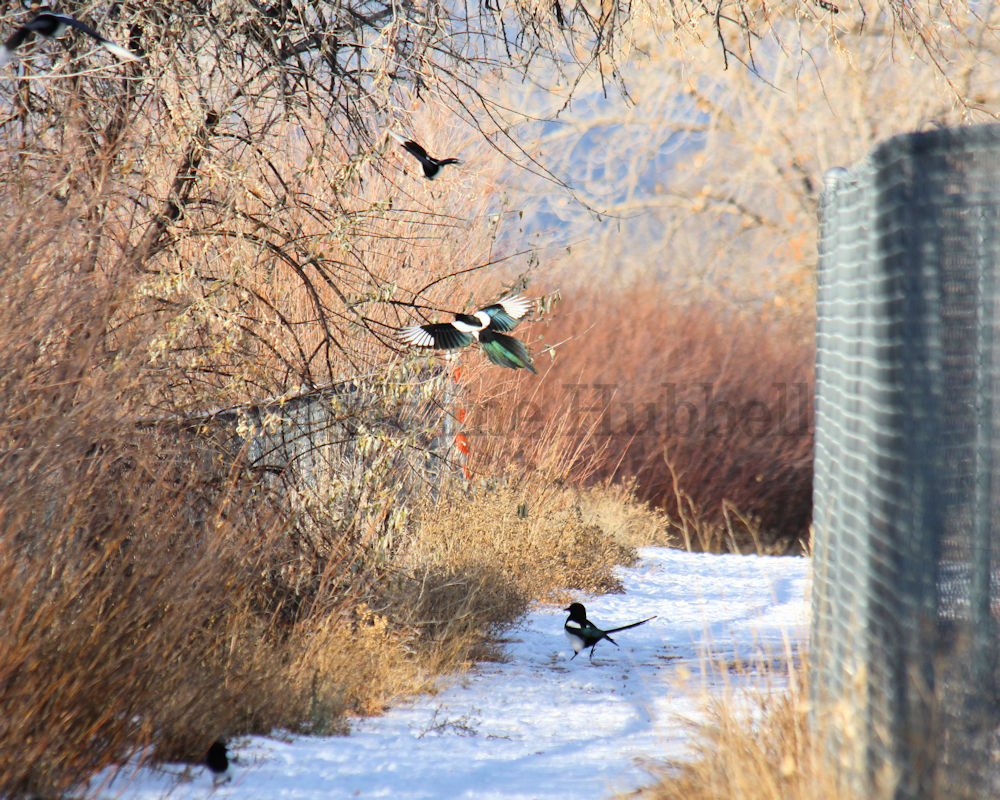
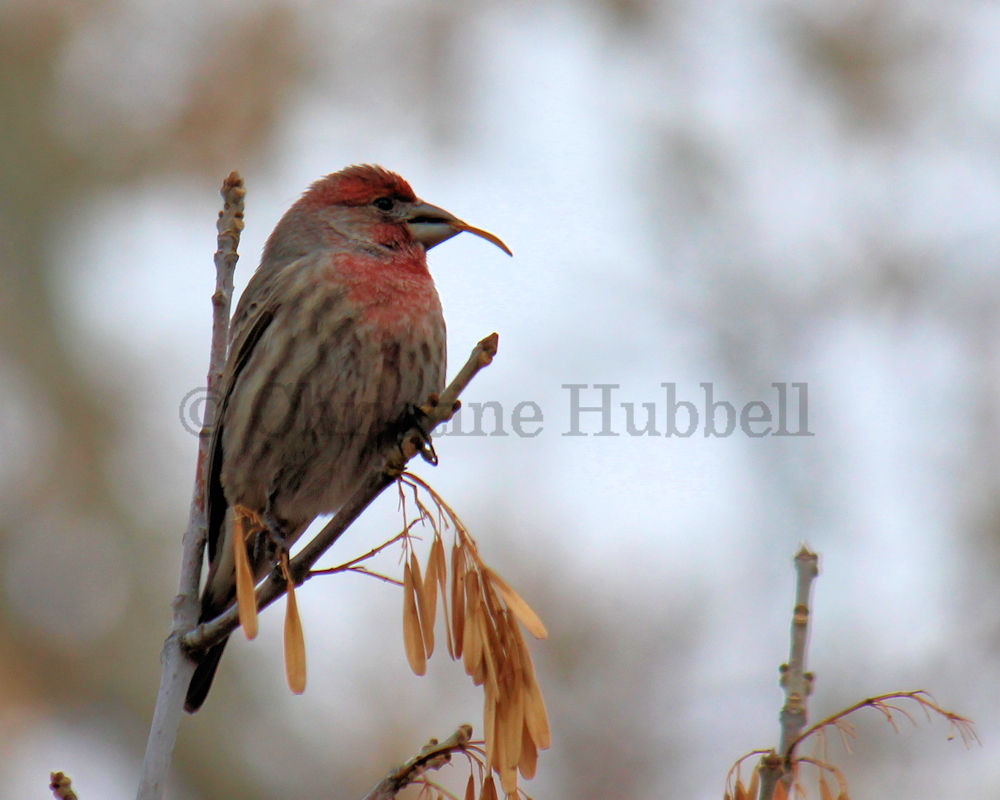
What I see are the dusty browns and gray-greens of faded plant material providing camouflage for the birds. That’s Colorado, of course. Fifty thousand shades of tan! Look closer and you notice that song birds and other critters are surviving on grass seed and the fruits that have persisted into winter. So there’s life in this season if you know where to look.
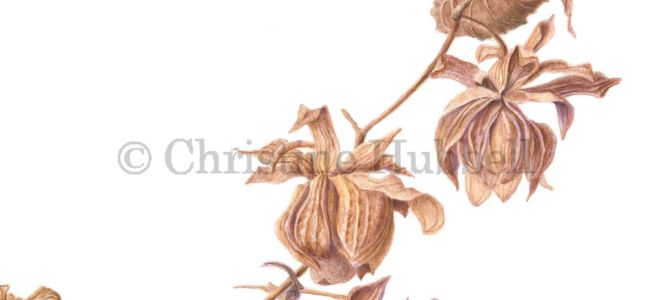
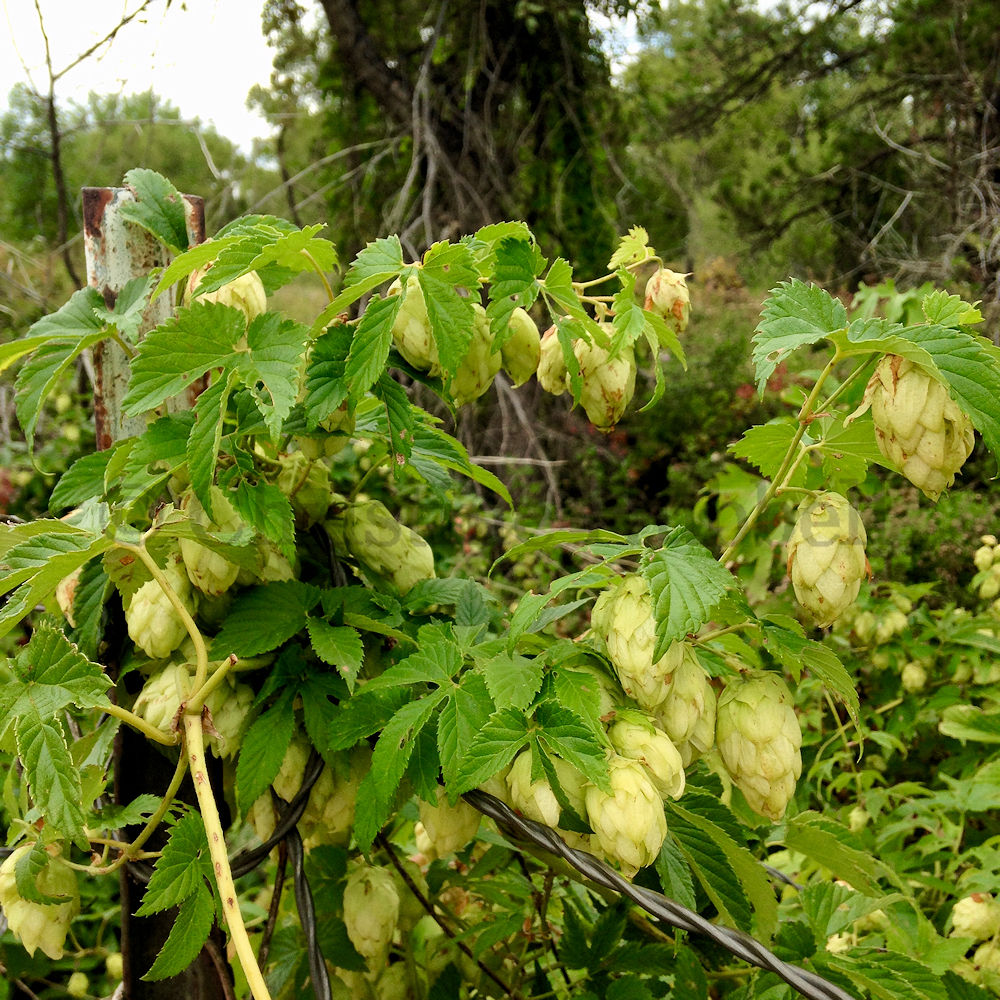
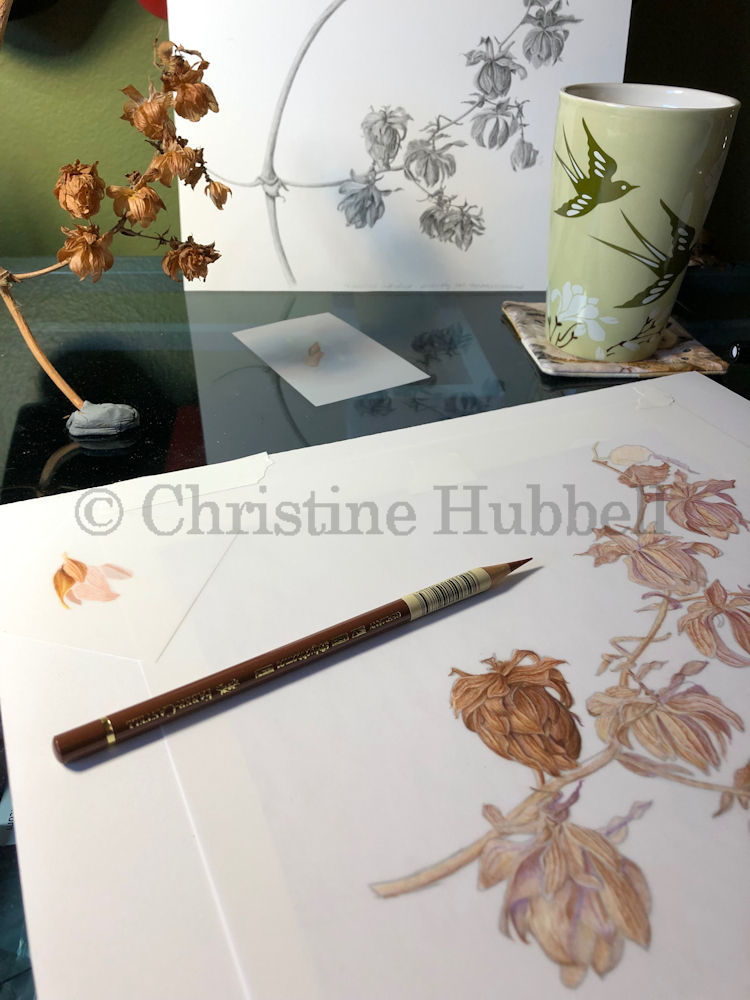
When I decided to illustrate the common hop plant, I was thinking about the plump green flowers I’d seen in early September.
But by December, the plants had long since dried. Botanical illustrators often reconstruct plants from herbarium specimens, which are specially prepared by trained collectors from living plant material. They are works of art in their own right, arranged to show the flowers and growth pattern of the plant. They bring the plants back to life.
Without a herbarium specimen, it was a bit of a stretch to think I could get the information I needed from a handful of dried hops. I got as far as soaking some curled leaves in water, unfurling them to get a look at their shape, and making a few sketches. The flowers were another problem. Hop flowers open and curl as they dry, so I couldn’t confidently use them to simulate fresh flowers.

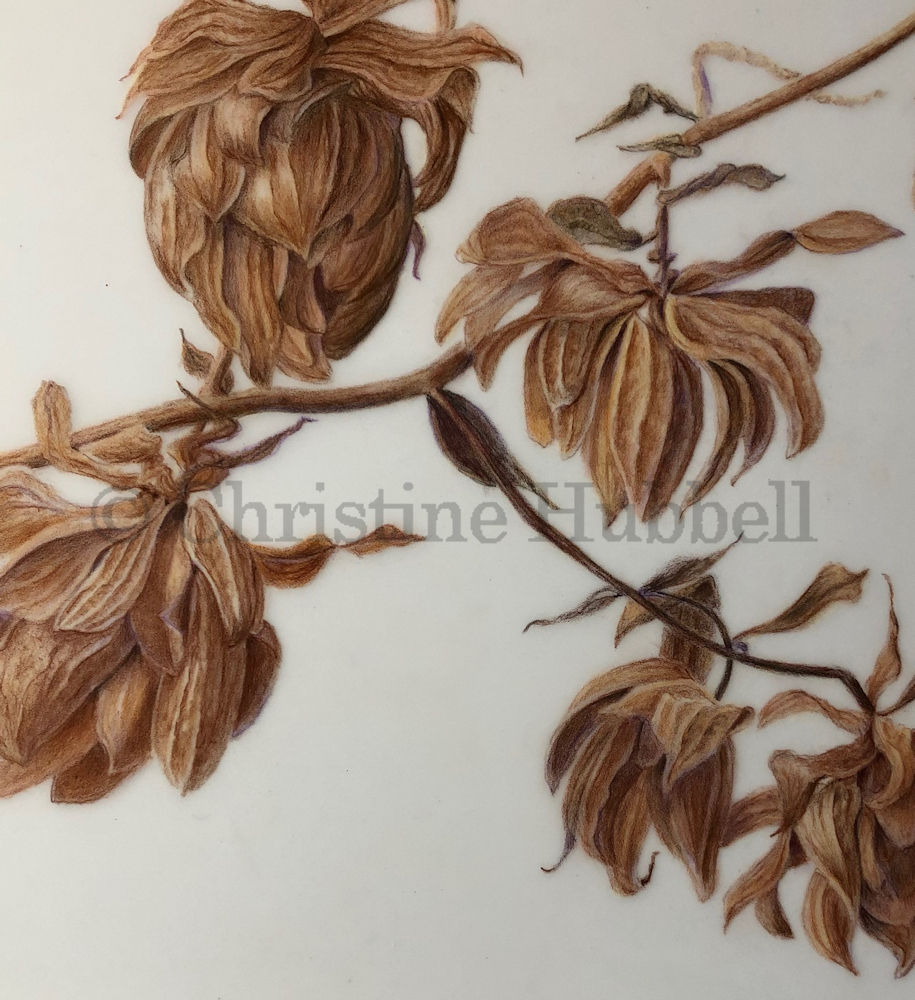
What I did learn from the dried hop flowers was just how interesting they are in their own right. There’s something soothing about their monochromatic warmth. The bracts and bracteoles swirl around the strig, reminding me of a paper chandelier or a folk dancer’s skirt adorned with ribbons.
There are many things pulling me forward as January drifts into February. In a few weeks I’ll be hosting my first ever open studio sale. Artwork needs to be matted, packaged and priced if it’s going to find a new home. I could jump into a swirl of activity.
Or I could ease into my studio while juncos forage for seeds in last year’s monarda. I could think about all the winter birds making a living among the last of the berries, and I could be grateful for a handful of dried hops on my drawing table.

I used to hate winter, especially the month of November. Here in Colorado, fall leaves hit peak color toward the end of October. We’ve had our first or second snow. The winds pick up, then die off, and November sets in. November days are stark, short, and ugly. At least, that’s how I used to think of them.
I believe that making and viewing art is transformative. My attitude toward November took a 180 degree turn when I spent part of the month designing and painting a small illumination based on the letter “N.” At first it had nothing to do with November. Just nuthatches. I’d been seeing them in my yard and went looking for them down at the creek.

At the creek I met a lovely fellow birder who knew exactly which trees the nuthatches were using. Cathy pointed me toward a couple of hollow Cottonwood branches and there they were. We heard them, too. Nuthatches have a squeaky balloon chatter that’s unmistakable once you catch on.
The more time I spent outdoors looking for nuthatches, the more I noticed that the days were not just dry and short, they were also warm and soft and beautiful. Birds sang everywhere. The water in the creek had a particularly bright sheen from the low, south-driven sun. I couldn’t possibly be warming up to November, could I?
But there it was, creeping into my design for the illumination. The winter sun moving across the sky. The nuthatch prying at the bark of a Cottonwood amid scattered leaves. A sense of stillness at the center of a season in transition. This was my early winter meditation, and it transformed how I felt about those bleak November days.
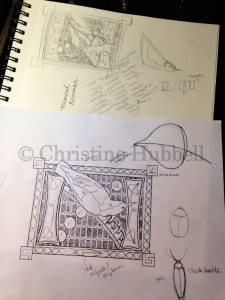
I learned illumination techniques from Renee Jorgenson, who is a wonderful artist, teacher, and master calligrapher. The process starts with a small design, no more than 4 inches square. Every element is carefully planned, from the letter form to the motifs and background patterns. Gold leaf goes down first, then flat color applied with gouache. Black ink and white or pastel details make the colors pop and add visual interest. When it’s successful, you get that sense of a medieval manuscript illuminated with jewel-toned colors. A mini stained glass window on paper.
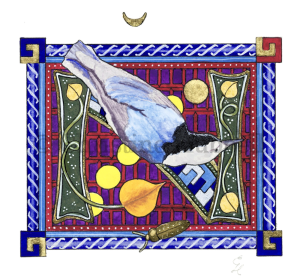
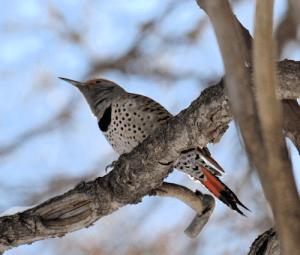
I scanned this piece and used it for Christmas cards, but its legacy is that I will always associate it with enjoying the month of November. I hope it speaks to you, too, because there are more tough winter months coming. February can be dark and cold. But “F” is also for flicker, and I think we’re ready for it.
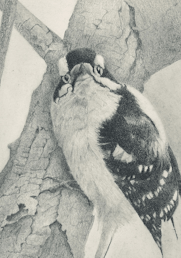
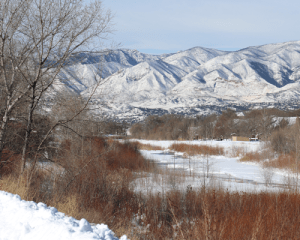
Winter can be full of surprises. This year I decided to walk a single stretch of Cottonwood Creek several times a week. I took my camera along, birding and observing. We’ve had more snow than usual, but the birds don’t care. They ignore me as I trudge along in my boots under the bare branches.
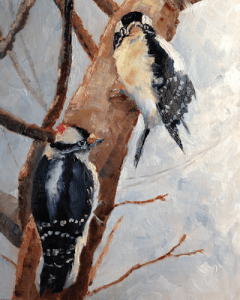
My favorite discovery has been a pair of downy woodpeckers that I saw spiraling up the narrow trunks of stunted trees. I’ve gone back many times to find the female, listening for her brief chirp or light tap-tap as she hunts insects under the bark. She has so much personality, I wanted to capture it. Working from photos, I first composed and painted the pair together, then decided to draw them separately. I read that downy woodpeckers are more solitary in winter. Here’s my study in oil. This was a big help in preparing the more finished graphite painting above.
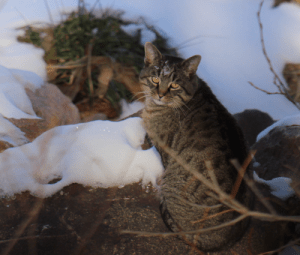
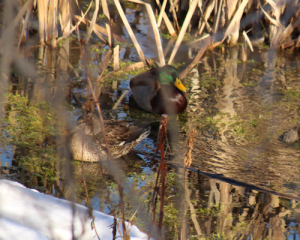
The creek hosts a nice range of bird species. Right now, it runs under a mantel of ice, emerging in matted vegetation at the edges. I caught this cat keeping a close eye on some mallards near the foot bridge.
Song sparrows, goldfinches, juncos, house finches, and chickadees all flit among the shadowed branches. This area also contains a number of dead trees that are perfect habitat for flickers.
As the weather warms and the trees leaf out, it will be harder to spot the birds. But I’ll keep looking. I wouldn’t want to miss spring migration and mating season, and all the lovely surprises that are sure to inspire new paintings.
 Christine Hubbell